ST. CHARLES COUNTY HISTORY

By Dorris Keeven-Franke

  • Sage Chapel Cemetery

    (First published April 27, 2018)

    Near the center of one of the largest cities in St. Charles County  sits a quiet little plot of ground that transports a visitor to an earlier time when many of its residents were enslaved people. In the early 1800s, Samuel Keithly (1789-1870) came from Kentucky, and settled in St. Charles County, bringing his slaves. The father of a large family with seven children, several step-children, and many grandchildren, the family had other members who owned slaves as well. By the 1840s, the family owned hundreds of acres of land, and had purchased  land near today’s O’Fallon, Missouri where Sage Chapel Cemetery lies.
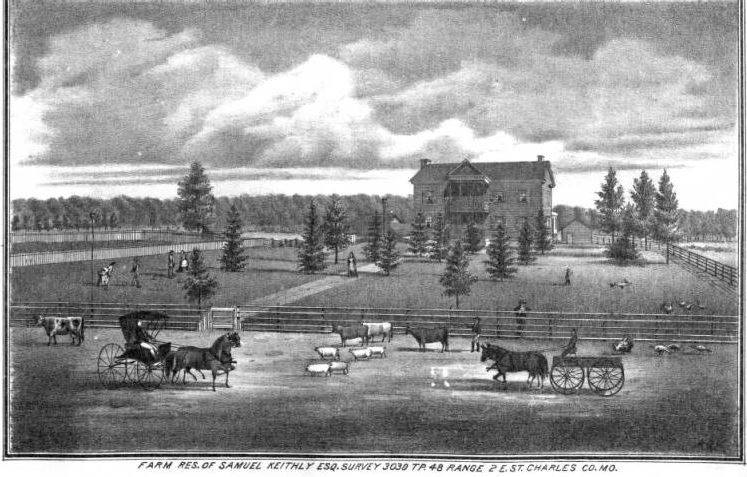
    Keithly was one of the largest slave owners in St. Charles County according to the U.S. Slave Schedules of 1850 and 1860. Among those slaves were John Rafferty and his sisters Ludy, Elsie and Lizzie according to oral history.
     

    th

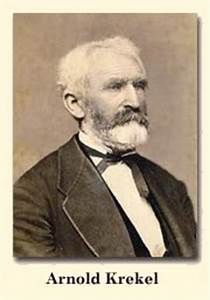
    The Keithly farm directly adjoined land purchased by German emigrant Arnold Krekel to the northwest, of 320 acres, where the town of O’Fallon was founded in 1856. Arnold’s brother Nicholas Krekel would become the O’Fallon’s first postmaster and Station Agent when the North Missouri Railroad came through in the 1850s. In 1855, a German born attorney named Arnold Krekel, purchased 320 acres of land on which he platted a town named O’Fallon, naming it after the railroad magnate John O’Fallon in hopes that it would become a stop on the westward push of progress. He set up his younger brother Nicholas as the Station Agent and Postmaster, giving him credit as the town’s founder. This created the unlikely neighbors of the Keithlys and the Krekels, with yet one common denominator. Both Samuel Keithly and Arnold Krekel owned slaves in 1860. Yet there their stories parted. Arnold Krekel, President of Missouri’s Constitutional Convention would go on to sign its’ Emancipation proclamation ending slavery in the State on January 11, 1865.

    Samuel Keithly didn’t free any of his slaves. Oral tradition states that he gave the land that we call Sage Chapel Cemetery to his slaves, where they worshiped in a field of Sage. Among Samuel Keithly’s slaves was John Rafferty. According to Mary Stephenson, who is a descendant, John Rafferty and his sisters, Frances, Ludy, Elsie, and Lizzie had been born in Kentucky, and brought to Missouri. (These are among at least 17 burials at Sage Chapel Cemetery that we know experienced Missouri’s Emancipation Day on January 11, 1865.

    When John Rafferty (Senior) passed away in 1881, his former master Samuel Keithly (Senior) had already passed away as well. Burials had already been taking place on the former Keithly plantation, on land that had been inherited and was by then owned by his daughter  Mahala Keithly Castlio (1817-1896) and her husband Jasper N. Castlio. We do know that in 1881, Samuel Kiethly’s daughter Mahala and her husband Jasper Castlio legally transferred  property that included a small church building of the African Methodist Episcopal Church on today’s Sonderen Avenue and the cemetery which lay at its southern terminus  to three A.M.E. Trustees.

    So on August 20th, in 1881, Mahala and her husband Jasper, transferred to three Trustees of the African Methodist Church, namely John Rafferty’s close friend Walter Burrel, Joel Patterson and Taylor Harris, for the use of the preachers of the African Methodist Episcopal Conference (headed by St. John’s A.M.E. Church in St. Charles Missouri) one acre of land, which became known as Sage Chapel Cemetery, so that these African-American burials could continue to take place. That same deed conveyed a half acre (with a building) to be used as a church. Then former slaves, like John Rafferty and Charles Letcher could continue to be buried where their ancestors had already lain for decades.
    Jefferson Sage (2)
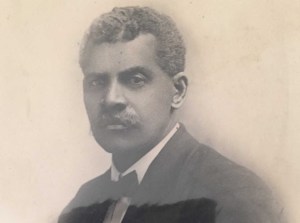
    Preacher Jefferson Franklin Sage

    At the same time there was a traveling minister with the A.ME. Church Conference named Jefferson Franklin Sage that preached along the route of today’s Interstate 70 between the city of St. Charles and further west in Jonesburg. He would preach there for many years before moving on to Kansas in the late 1890s. And by that time, there were two other black churches along today’s Sonderen Street, where a large African-American community lived.
    27857943_10214465943396486_2907045797306557012_n
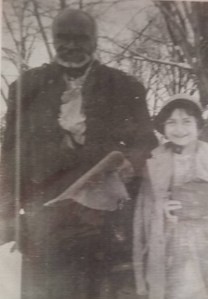
    Charles Letcher, ancestor of Mary Stephenson

    Nearby, Wishwell Baptist Church was begun in 1891 and was a plant of Hopewell Baptist Church that had begun in the 1850s south of Wentzville on the Boone’s Lick Road. Wishwell was near the creek, on the east side of Sonderen, close to Sage Chapel Church. The other African-American Church was Craven’s Methodist, begun in 1871, near the corner of Elm and Sonderen. Next to Craven’s, on the corner, was the town’s African-American school, and across the street was the “Colored Odd Fellow’s” lodge that met in Willis Thornhill’s house until Henry Obrecht purchased the property in 1910. All of these lay on today’s Sonderen Avenue, which ran north to south from the Wabash Railroad to Sage Chapel Cemetery near the former Keithly plantation. This was also the dividing line between the property of the Krekel Addition and the former Keithly’s until 1951 and the City’s annexation of property. This was the line for segregation.

    By the early 1900s, the early road to St. Peters, which led from the railroad in O’Fallon, passing Sage Chapel Church and the cemetery, became known as “the Hill” because of the African-American community that lived along it. There was the Thornhill house where the colored members of the Oddfellows met, the black school house, and the two other

    28660389_10210131645722500_4966308518144412167_n
    In the back is the corner of the Black school to the left, and then Cravens Methodist Church to the right. The children are of the Obrecht family, for which we are indebted for the picture.

    African-American churches. Many of those buried at Sage Chapel Cemetery were members of one of those three churches or of that community, that is today’s Sonderen Street.

    By the late 1940s, many of the African Americans were moving away from O’Fallon in search of employment. The three churches would close, and have since even disappeared entirely, along with any records that may have existed.

    Even though all three of these African-American Churches are no longer standing, and the buildings that once housed the black school and the Odd-Fellows lodge are largely

    bill-hayden-8
    O’Fallon residents

    remodeled, Sage Chapel Cemetery still exists. Significant in today’s world where such places are so often lost and forgotten. A peaceful and quiet testament to a difficult time and such families as Hayden, White, Edwards, Thomas, Rafferty and Ball. While many of the community of African Americans left O’Fallon in the late 1950s and early 1960s in search of better job opportunities for their families, some remained. And while many of Sage Chapel’s residents died living in St. Charles, St. Louis or even as far as New Orleans,  they were brought home to Sage Chapel when they passed. Eventually all three churches would use Sage Chapel to bury their families.
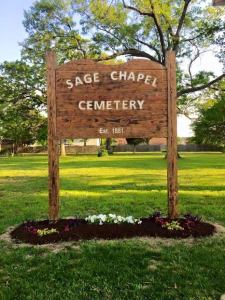
    Sage Chapel
    a wonderful sign which was the original idea of Jim Pepper and it was constructed as an Eagle Scout Project by Jim’s grandson, Jackson Pepper.

    Today,  the cemetery is owned and maintained by the City of O’Fallon and has 117 documented burials of which only 37 have headstones (2018). Of those documented burials at least 17 of them were individuals born enslaved.  They personally experienced Emancipation Day for Missouri’s slaves on January 11, 1865. Many of these people had difficult lives and would experience segregation their entire lives. The story of the people of Sage, tells us of a time period that today’s living cannot recall. Oral family histories continue to share stories of these people’s lives, and their tragic deaths. 

    In 2018, Sage Chapel Cemetery was placed on the National Register of Historic Places. One of the largest cities in Missouri, O’Fallon is setting an example of how to honor its history, even the more difficult stories. This in turn leads to a greater understanding and a richer dialogue for everyone. Thank you O’Fallon, Missouri, a great place to live! My website sagechapel.com shares the stories of the “People of Sage” who lie buried there because “As long as a name can be spoken, that person shall not be forgotten.” And it is only through a recognition of that past, that we can continue to build a better future for all generations to come. This is my website, and if you wish to contact me with any additional information or stories please use this contact form https://sagechapel.com/contact/.

    If you would like to receive more stories like this, you can subscribe to my blog below:


  • Franklin School

    Category: Places

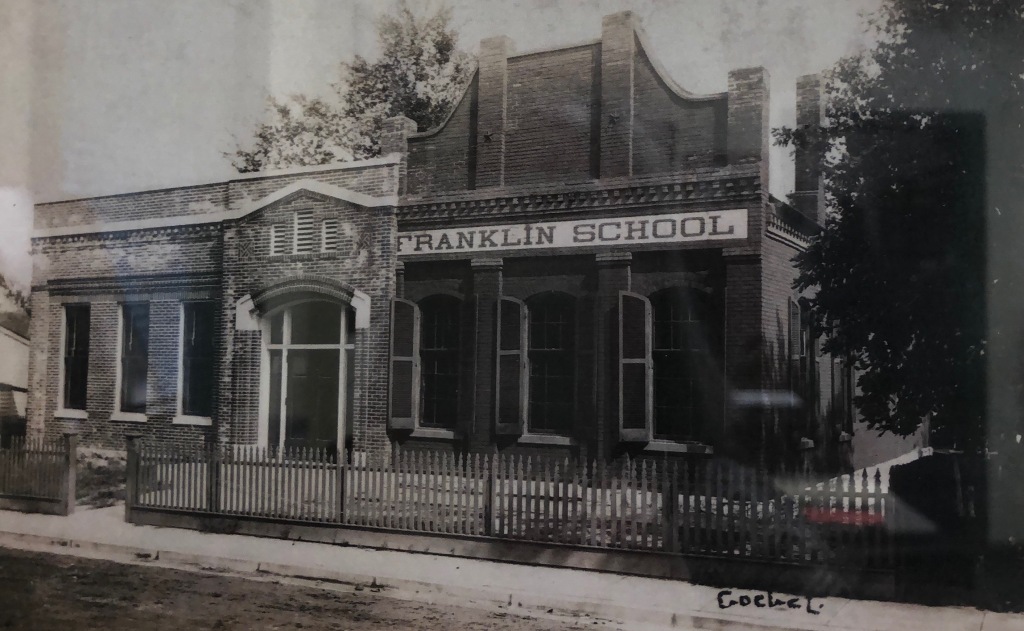
    In 1846, when the first public school Board was created, and German born Arnold Krekel was a director, public education was only for white students. As plans for public schools took shape, there was a count of school age children made, which unfortunately did not include colored children. It was illegal to educate blacks under Missouri Law in 1847. It wasn’t until after Missouri’s Emancipation of its slaves on January 11, 1865 that things changed. In 1866, Jacob Weston was hired by the public school board and paid $20.00, in part payment, to teach the colored children in St. Charles. William Royce, began to collect subscriptions to build a public colored school, for the 167 colored children. The school board announced that school would start in December 1867. The African Church at Second and Pike Streets served as a school house and received $5 a month rent for that. By 1870, plans were being made to purchase the church.

    At that same time, the Franklin School building was purchased from St. Louis University. For $3,500 the school board purchased everything, even the benches, in the school house that had been serving as a Catholic school for the St. Charles Borremeo parish since 1855 when it had been built. The colored school population was divided between the African Church and the Blue Ville School at Gallaher and Olive. In 1871, The colored Methodist Church was then purchased for $1250. In 1897, all colored children were being sent to what was Lincoln School at Second and Pike.

    It wasn’t until 1901, that H.H. Peck spoke up about giving the African-American children, of which there were 80 at this time, a full day’s education. He also wanted another teacher since there were so many students, but that was denied. Instead on October 7, 1902 the school district opened the Franklin School to relieve the overcrowding at

    IMG-1422
    Franklin School’s new addition in 1910

    Lincoln School. It wasn’t until 1910 that the first mention of graduation exercises. In 1914, Lincoln was the white school and Franklin was all black, and an addition was built to accommodate all the former black Lincoln School students. The addition was made at a cost of $2,674. In 1921, the State Superintendent of Schools suggested that two years of high school be added. Improvements of more rooms at a cost of $11, 418.00 was done at this time as well. And in 1922, the first diploma was awarded to Clarence Thomas Shelton.

    In 1925, the front of the school was modernized to today’s appearance. A lot was purchased for $7,500 to provide a playground for the students. In 1931, a third year was added to the high school, and in 1932 a fourth year was added. By this time, bus transportation covering 60-80 miles a day in its route, to bring African-American students from Jonesburg, Warrenton, Wright City, Wentzville and O’Fallon. It was great event when in June of 1933, Franklin School proudly graduated ten students from its four-year high school. In 1938, a gymnasium was built on the south side of the school building, where the former George Hellrich home had been, at the cost of $17,980.00. Another house on Hellrich’s property served as the Home Economics building.

    IMG-6933(1)

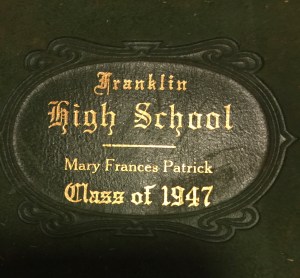
    Integration came to Missouri’s schools in 1954, and the lower grades were the first to be racially integrated. An era came to an end on a Thursday evening in June, the 2nd, in 1955 with the last graduation of Franklin High School. Hundreds of students from African-American communities in Warren, Lincoln, and St. Charles Counties had gained that important High School education in this building. Portions of its halls had served students since 1855, with a majority of its life as an all-black school. Student Mary Stephenson’s family had moved to O’Fallon from a farm in St. Paul, to attend school. She would pass school buildings that were a block from her home, to ride an early morning bus, to receive a high school education. Dedicated teachers, used all the materials they could find, and taught several different subjects. They insisted upon learning and the importance of education. This was a place that instilled pride in hundreds of former students that passed through its hallways. This sense of pride can still be seen today in the homes of these families. Their pride in their education still echoes in the hallways of their homes, and in their discussions with their grandchildren and great-grandchildren.

    Some of the Information for this post came from the National Register Listing for the Frenchtown District and One Hundred years of Negro Education in St. Charles, Missouri by Stephen Blackhurst, Jr..

  • William Eckert

    William Eckert was born the 13th of August 1797, in Virginia[i], spent some time in Ohio, before coming down to Jackson, Missouri[ii] where the young man opened his first Mercantile. He served in the War of 1812[iii] and then arrived in the young village of St. Charles, where he married Francina “Fannie” Smith in the old Borremeo Church [Saint Charles Borromeo Parish] on the 16th of April, 1818[iv].This enterprising young man opened a tavern calling it the Sign of the Buffalo (Bradden’s 1818 Bistrot Restaurant, 515 South Main Street) [v] that competed for being the location of the temporary State Capitol (Missouri’s First State Capitol is at 200 S. Main) with the Peck brothers, Charles and Ruloff, when it was established at St. Charles in 1821. Despite proving that he had a better location, Eckert would lose out, most probably ­due to the politics (the Peck Brothers uncle was a prominent St. Louis Judge) at the time. It is local legend that this would would be where William Becknell and George Sibley would map the route for the first excursion to Sante Fe at this inn. (Becknell is the founder of the Sante Fe Trail, which celebrated its 200th Anniversary in 2021.)

    This promising young businessman went on to become a trustee[vi], and the treasurer for the village of St. Charles[vii], and run the postal route between St. Charles and Bowling Green[viii]. He was also one of four owners in the Steam Ferry Boat Company that ran on the Missouri River with their boat the James Morrison.[ix] His partner Francis Yosti was a son-in-law of the James Morrison who lived down at the corner of Clay [today First Capitol] and Main (today’s Berthold Park). By 1840, he owned six enslaved people that perhaps made up two families: two males ages between the ages of 10-23, one female between the years of 36 to 54, two females between 10-23, and one female child under the age of 10. 

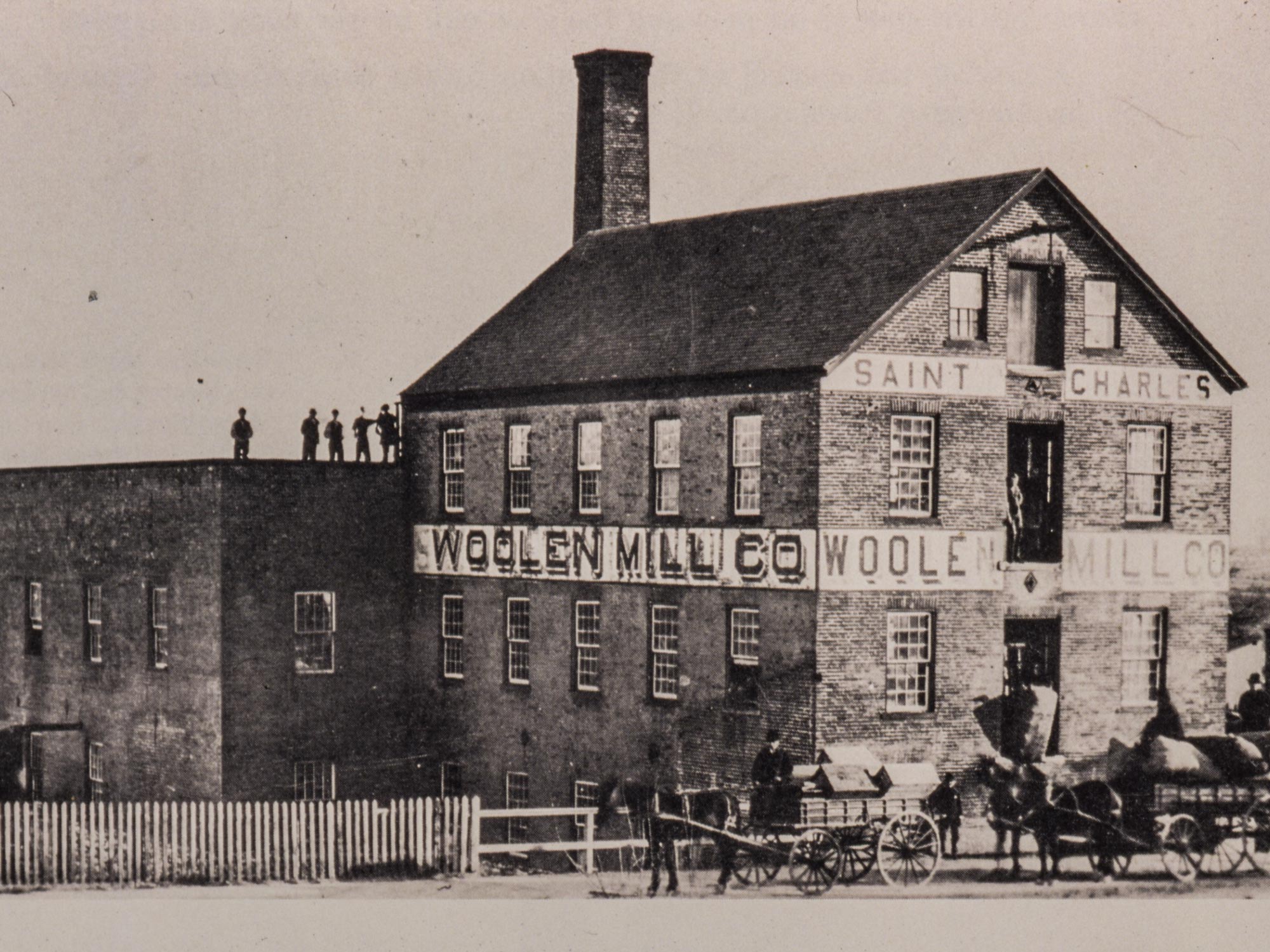
    Eckert’s son-in-law was another enterprising young man, 21 year-old Franklin Newbill who owned the woolen mill at the corner of Main and today’s Boone’s Lick Road (920 S. Main Street), and who had married Eckert’s 16 year-old daughter Marian “Polly” on the 3rd of December 1835[x]. They would later live in a two-story brick house on Main Street (Newbill-McElhiney house, 625 South Main) which was built on a lot Eckert had bought from John Yarnell on the 4th of February 1824.[xi]  (This was the original portion of the house, before the McElhiney family enlarged it to what it is today.) Eckert’s fifteen year old daughter Caroline married twenty-eight year old Owen Andrews from New York, on November 4, 1840. 

    Over the years, Eckert and Newbill were in business together, but by October of 1845, they had had a falling out and Newbill was totally out of the picture. William Eckert and his family were living at 625 South Main when Eckert died on April 2, 1846. When Eckert died, his widow Fannie ordered two caskets, one lined and one unlined from Stephen Werremeier a carpenter who was her next door neighbor, who charged her $18.00 that April 3rd. Eckert was then buried on the hillside graveyard known as the “city of the dead” overlooking the village he loved so much.

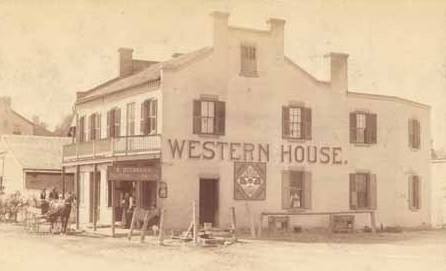
    In 1850, Owen Andrews owned 8 enslaved individuals and was the innkeeper; and Eckert’s widow Fannie was the owner of the Western House (1001 S. Main Street) and owned three enslaved individuals; a 26 year-old black female, a 14 year-old black male, and a little nine month old black girl. The Inn was located on the Boone’s Lick Road which ends in the town of Franklin (in Howard County) and the beginning of the Sante Fe Trail. 

    Many years later, the St. Charles Banner-News, on the 26th of August in 1909 carried the following article “Ancient History” written by its Editor:

    “The reminiscences and recollections of Mrs. Louisa Heye which are being printed in the Cosmos are full of interest, and for the most part fairly correct… If we are correctly informed the mortal remains of William Eckert sleep up on the “River Side” Cemetery, which the town of St. Charles purchased and used as a “city of the dead” many years ago, but now abandoned. If this information is correct, we could not have a more peaceful resting place. The ripple of the river sings constantly his requiem and around the forest trees the stillness of nature is broken only by the sighing winds and the songs of the bids. In his life he was alert, active, and full of energy, contributing to the growth and progress of the town his might and after life’s fitful fever he sleeps well.”[xii]

    Eckert’s probate, was administered by his close and best friend William G. Pettus, Missouri’s first Secretary of State, was known for crossing all of his Ts and dotting all his i. In that estate, we find Lot 3 of Block 1, which on August 28,1848, Pettus is selling some of Eckert’s numerous properties to settle the estate. The property description states “saving and excepting out of Lot. No. 3 in Block No. 1, one half acre of land laid off in a square form in such manner that the grave of said William Eckert shall lie in center of said one half acre….”[xiii] It would take over 10 years to completely settle Eckert’s estate, partly because of the difficulty Pettus had in locating Newbill, who owed money to the estate.

    Today, that small 147 foot by 147 foot half-acre plot lies somewhere along the hillside on the south end of St. Charles above the Ameristar Casino, near the Crestview Apartments and the old winery. It is hard to imagine a cemetery there today. Funny the things you find when you’re not looking for them.  When I found this mention of Eckert’s grave,  I was researching the Boone’s Lick Road yet the research would give me insights into so many other stories about St. Charles’ Historic Main Street. (See link for tour and map of all 150 stories!) 

    Hope you’ve enjoyed this and all my stories. Subscribe and get an email every time a new story is shared.

    Notes

    [i] Family papers

    [ii] Houck’s History

    [iii] Arkansas Land Warrant

    [iv] Borremeo Records

    [v] SCCHS, Eckert Family File

    [vi] City of St. Charles Minutes, Book A

    [vii] City of St. Charles Minutes, Book A

    [viii]Wm. Eckert Probate

    [ix] Wm. Eckert Probate

    [x] Borremeo Records

    [xi] Wm. Eckert Probate

    [xii] Supplied by Justin Watkins

    [xiii] Abstract for Block 1, also known as Hall’s Addition

    Eckert’s Tavern “Sign of the Buffalo” at 515 South Main Street (Today’s Braddens 1818 Bistro)
    The Western House at the corner of the Boone’s Lick Road and South Main Street in St. Charles, MO (1001 S. Main St.)
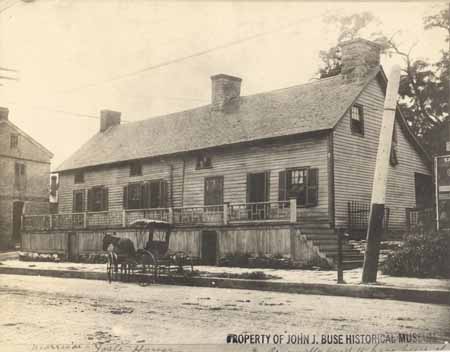
    Morrison's Mercantile
    Morrison’s Mercantile on South Main Street (Today’s Berthold Park) at the southwest intersection of Clay (today’s First Capitol) and South Main Street. Morrison owned the salt lick at the other end of the Boone’s Lick Road. From the John J. Buse Photo collection State Historical Society of Missouri.
    St. Charles Woolen Mill
    920 South Main was Franklin Newbill’s Woolen Mill that was used by Col. Arnold Krekel’s Union Troops during the Civil War. The troops would use it to guard the Missouri River traffic and the railroad.
    Newbill-McElhiney house
    625 South Main originally was a smaller two-story building that was later enlarged by the McElhiney family. The earliest portion, bottom left basement and first floor, had been built by William Eckert.