ST. CHARLES COUNTY HISTORY

By Dorris Keeven-Franke

  • Smith Ball, a freedom seeker

    On Sunday, February 28, 1864, thirty-one-year-old Smith Ball had made his way from one end of St. Charles County to the other, a distance of about 25 miles, to reach freedom. His enslaver was John Ball who had passed away in 1850, leaving fifteen enslaved people living in three small cabins on his widow, Ann Hitch Ball’s large tobacco plantation.[ii] The Ball Plantation was located at Flint Hill,near the Boyd plantation, also in Cuivre Township, a community just over seven miles east of Snow Hill. 

    Smith Ball had been born May 26, 1833[iii], in Virginia, and had been brought to Missouri during the 1830s.  According to his enlistment papers, he was a light-colored black [man], 5 foot 10 inches tall, with brown eyes and black hair.  He left behind a wife Minerva Pringle, and four children, William, Lucy, John H., and Ada. When mustered in at Benton Barracks, he was examined by John Bruere, MD. of Benton Barracks in St. Louis like hundreds of other troops. He served in Company B of the 68th US. Colored Troops. [iv] The remarks on the Descriptive list stated “Recruit presented himself” meaning that he had fled his enslaver, Ann Hitch Ball(1804-1870), the widow of John P. Ball (1805-1858)[v].

    The 68th U.S. Colored Troops were Infantry, and Ball would advance to Sergeant before mustering out. He had fought at Fort Blakely in Alabama, The Battle of Blakeley was the final major battle of the Civil War, with surrender just hours after Grant had accepted the surrender of Lee at Appomatox in the afternoon of April 9, 1865. Mobile, Alabama, was the last major Confederate port to be captured by Union forces, on April 12, 1865.

    He and Minerva would raise a large family, William, Lou, John, Lina, Ada, Julia, Minnie, Birdie, and Mary. By 1900, she had passed away and was buried at Smith Chapel but her father Austin Pringle, who had been born in 1811 in Kentucky was still living with his son in law and grandchildren. When he died in 1912, at age 78, he was living alone at Foristell. He was buried at Smith Chapel Cemetery, where he had served as one of the nine original Trustees in 1871


    Notes

    [ii] 1850 U.S. Federal Census – Slave Schedules Record, United States of America, Bureau of the Census. Seventh Census of the United States, 1850/i. Washington, D.C.: National Archives and Records Administration, 1850. M432

    [iii] MO Secretary of State, Bureau of Vital Statistics, Death Certificate of Smith Ball, Sept. 13, 1912.

    [iv]Compiled Military Service Records of Volunteer Union Soldiers Who Served the United States Colored Troops: 56th-138th USCT Infantry, 1864-1866; NARA; 300398; Carded Records Showing Military Service of Soldiers Who Fought in Volunteer Organizations During the American Civil War, compiled 1890 – 1912, documenting the period 1861 – 1866

    [v]  The 1860 U.S. Federal Slave Schedule for Ann Ball, Cuivre Township, St. Charles County.

    Subscribe to this blog:

  • Freedom Seeker Martin Boyd

    On October 31, 1864, freedom seeker Martin Boyd, born in 1826, left the 300-acre plantation of Alexander Boyd and tried to make his way to George Senden’s store on Main Street in St. Charles, only to make it as far as Peruque Creek Fort at the Missouri Railroad Bridge. There Capt. L.D. Jay would enlist the 5’9” black man into the U.S. Colored Troops. Later, Alexander Boyd tried to show proof that he had inherited Martin from his mother Ruth Carr Boyd, widow of William Boyd, and that Martin Boyd was his property, and was seeking compensation for Martin’s Services and that as such he was entitled to a $300 bounty. Alexander did not receive it. Freedom seeker Martin Boyd would serve in Company B of the 49th United States Colored Troops, until March 22, 1866.  That December 31st, 1866, he would marry Mandy (this is Amanda) Logan, as Black Marriages were now legal. Over 8,000 African-American men would serve in the U.S. Colored Troops during the Civil War.

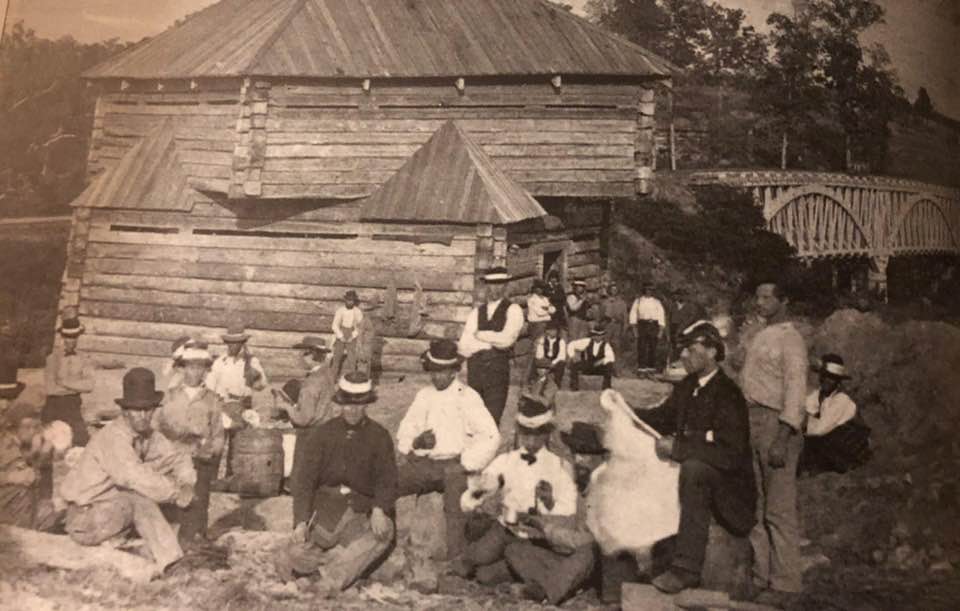
    Fort Peruque was manned by Union Troops, that were Missouri’s Home Guards, assigned to guard the North Missouri Railroad Bridge (in the background), where it crossed the Peruque Creek (located at 1052 Peruque Creek Crossing today). The fort was constructed in 1862 and manned until the war ended.
    Photo from St. Charles County Parks website – Towne Park is loacated 100 Town Park Dr. (off of Hwy 61) in Foristell.

    For more stories about St. Charles County History…

  • Elijah Lovejoy in St. Charles

    Around 1822, a schoolteacher named Anthony C. Parmer sold his two story brick building at 301 South Main Street to a prominent physician from Vermont named Dr. Seth Millington. Seth, and his brother Jeremiah were prominent residents in the early village of St. Charles, but Seth would pass away from the Cholera epidemic on August 4, 1834. At the time of his death Seth Millington’s estate would include nine enslaved African Americans. The instructions left in his will was for them to be taken to Liberia.

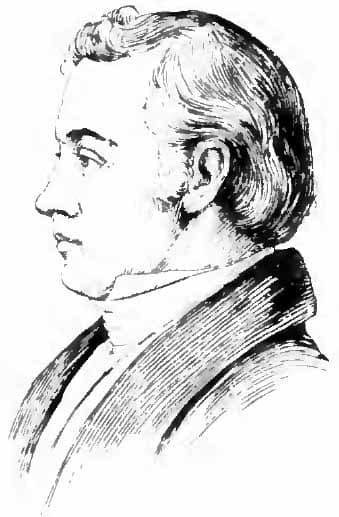
    Seth and Jeremiah had a sister Sarah also called “Sally” who had married Thomas French but she had become widowed in 1835 and she had gone to stay at Seth’s former home in 1837. Sally and Thomas French’s daughter Celia had married the former St. Louis editor Elijah P. Lovejoy, who was a well-known abolitionist and newspaper editor, in addition to being a Presbyterian minister. On October 3, 1837, Elijah Lovejoy had just finished giving a talk at the Second Street Presbyterian Church and was visiting the home of his mother-in-law with his wife and baby. The church was just up the street (where today’s SSM St. Joseph Hospital is today) and only a block away from Sally French’s apartment.

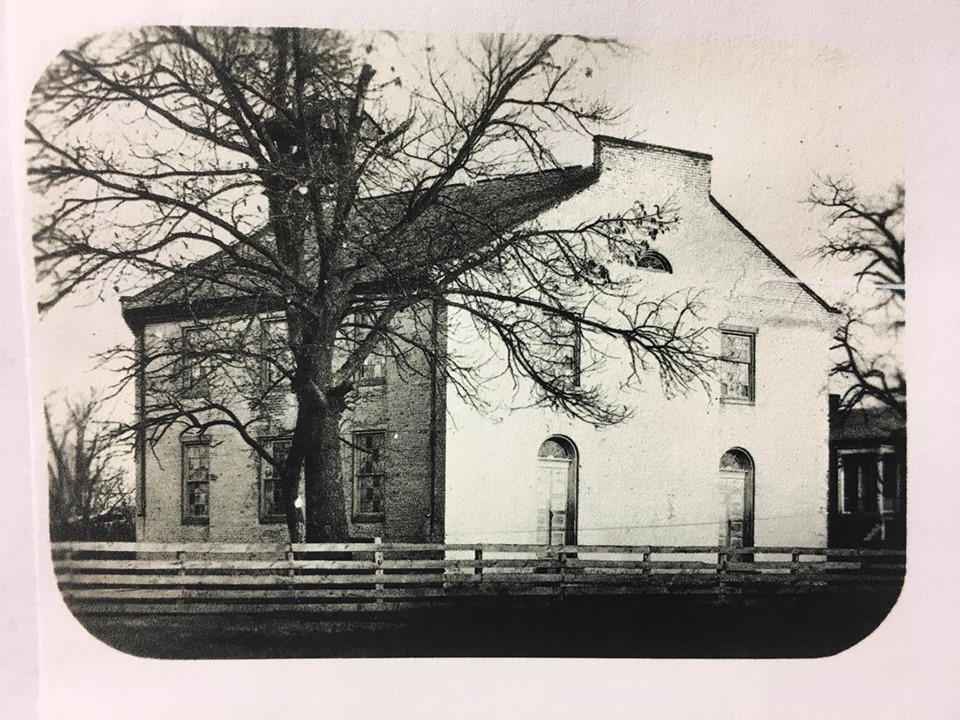
    St. Charles Presbyterian Church on Second Street

    Lovejoy’s close friend George Sibley (1762-1863), whose wife, the former Mary Easton (1800-1878), had founded the girls school called Linden Wood, which was just a short distance away, would lend Lovejoy a horse. That night Lovejoy would quickly leave St. Charles, and make his way back across the Mississippi River to his home in Alton, Illinois.

    After the burning of Francis McIntosh on April 28, 1836 in St. Louis, Lovejoy had championed the end of lynchings of Black Americans and the abolition of slavery, in his newspaper the Alton Observer saying,

    Sadly, it would only be a few weeks later though when Lovejoy was revisited by another angry mob on November 7, 1837, in Gilman’s Warehouse in Alton. There Elijah Lovejoy was shot and murdered while trying to save his press, which had been thrown into the river. Lovejoy has often been referred to as a martyr and the founder of the “free press” in America, a right guaranteed to all citizens under the First Amendment of the U.S. Constitution.

    The formerly enslaved John Richard Anderson is said to have witnessed the whole event, as he was working as a typesetter for Lovejoy at the time. Anderson was a former slave of the Bates family, who after being emancipated, would learn how to read and write and later become a Baptist minister, like his close friend John Berry Meachum. (Both of them are buried at Bellefontaine Cemetery and Arboretum in the Baptist Minister’s Lot, purchased by the Baptist minister John Mason Peck.)

    Subscribe to this blog for more stories…