ST. CHARLES COUNTY HISTORY

By Dorris Keeven-Franke

  • Saint Charles in 1804

    Monday 21st May 1804.    Some rainy.    we took on board Some more provision bread &c.    about 4oClock P.M we Set out from this place.    fired our bow peace and gave three cheers, and proceeded on in good heart, about __miles and Camped on the North Side.    2 frenchman went back to the village.    two of our men Stayed at St. Charles in order to come on with the horses

    Monday May 21st    This morning we had some Rain, part of this day was employed in taking in Provisions &ca.—    about 4oClock P.M. we took our departure from Saint Charles, a number of the Inhabitants had assembled to see us set off we fired our Swivel, from the Bow of our boat; and gave them three Cheers, which they returned; we then proceeded up the River about 3 Miles, and came to, on the North side of said River where we encamped.    We sent two of our hands back to Saint Charles , in Order to bring on two of our Men, that were left with horses at that place.    We found the current of the River very rapid, the Banks steep, & the bottom very miry.    The course of the River running due West from its mouth this place.    The country lying level, and very fertile.—

    This is a journal entry (above) of Joseph Whitehouse (1775-?) served as a Private in the Lewis and Clark expedition, and is the author of one of the journals kept. He was a “skin dresser” which was a tailor, and made most of the clothing that the men wore on the expedition.

    A portion of the map Lewis and Clark used (below) when they departed St. Charles on Monday, May 21, 1804. It was originally drawn in 1798 by Nicolas de Finiels and added to by James Mackay, James Evans, William Henry Harrison, Meriwether Lewis and William Clark.

    Map is from the Library of Congress Geography and Map Division Washington, D.C. 20540-4650 USA dcu (URL http://hdl.loc.gov/loc.gmd/g4127m.ct000583 Library of Congress Control Number 2002621122

    One of the members of the Lewis and Clark Expedition was an enslaved man named York (c 1770-c1815) who served as a manservant for William Clark for the entire expedition and afterwards. He also contributed to the expedition as a scout, hunter and negotiator with the Native Americans they encountered.
  • The Little Hills

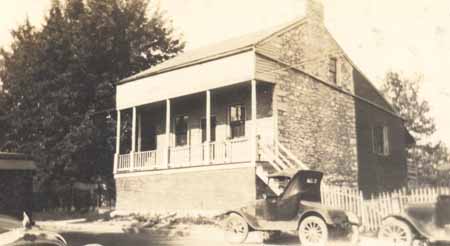
    The stone portion of the building is the home of James Mackay, Commandant of the Illinois Territory in 1804. It stood at 1017 South Main Street. “This is the site of the headquarters of James Mackay (sometimes referred to as Don Sanitiago Mackay) who was the Commandant for St. Charles from 1802-1804. The original building had been built of Burlington stone in 1797. When the Spanish appointed him to replace Carlos Tayon, his home was at today’s Chesterfield, across the Missouri River and west of St. Charles. A former explorer and fur trader, Mackay had led expeditions up the Missouri River creating the map that Lewis and Clark would later use for their famous 1804 expedition. In 1804, though aware of all the political negotiations of the time, for the Louisiana Purchase, Mackay would defy instructions by his Spanish government to block the expedition. Instead he met and conferred with its leaders. No doubt it was Mackay’s prescence that was one of the reasons that attracted the Corps to consider St. Charles their starting point.” [See Historic Main Street Tour https://storymaps.arcgis.com/stories/ef8dfd89425c46349ead22cd80213320]

  • FREEDOM DAY CELEBRATION

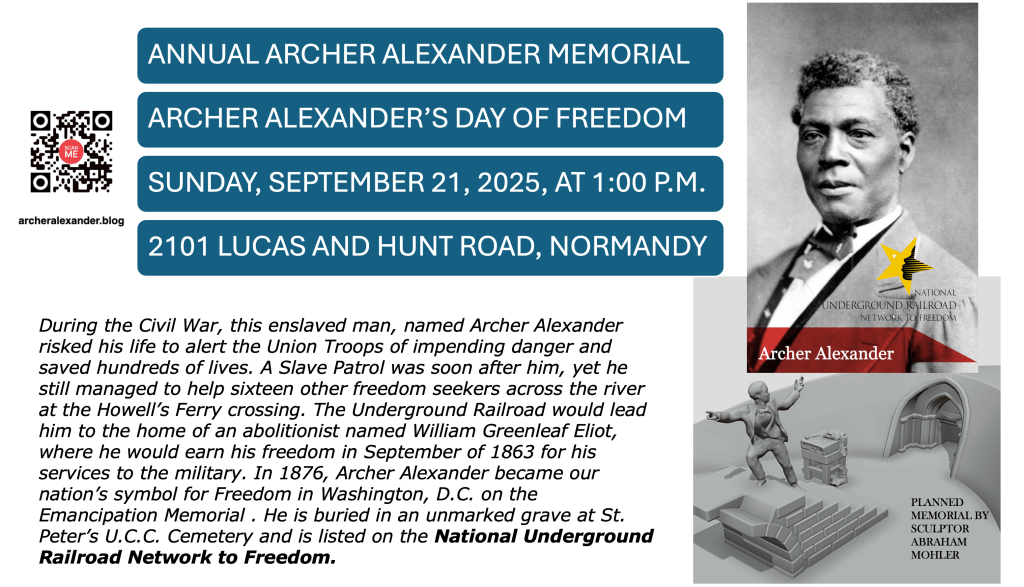
    On Sunday, September 21, 2025 the public is invited to our Annual Archer Alexander Memorial service in honor of his Day of Freedom. Please join us at 1:00 p.m. in the St. Peter’s United Church of Christ Cemetery at 2101 Lucas and Hunt Road in Normandy (St. Louis) Missouri.

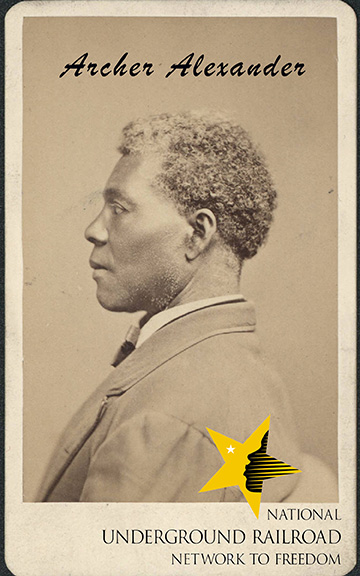
    During the Civil War, this enslaved man, named Archer Alexander (1806-1880) risked his and his family’s life to alert the Union Troops of impending danger at the Peruque Creek Bridge in St. Charles County and saved hundreds of lives and supplies. A Slave Patrol was soon after him, yet he still managed to help sixteen other freedom seekers across the river at the Howell’s Ferry crossing. The Underground Railroad would lead him to the home of an abolitionist named William Greenleaf Eliot, where he would earn his freedom on September 24th of 1863 for his services to the military. In 1876, Archer Alexander became our nation’s symbol for Freedom in Washington, D.C. on the Emancipation Memorial . He is buried in an unmarked grave at St. Peter’s U.C.C. Cemetery and is listed on the National Underground Railroad Network to Freedom.

    You will meet members of the family of Archer Alexander, hear the story of “Louisa” in a one-act play by actress Peggy Neely Harris, and meet the sculptor Abraham Mohler and learn about the memorial planned at St. Peter’s U.C.C. Cemetery. The public is invited to join us for the event.

    For more information use the form below:

    ← Back

    Thank you for your response. ✨

    TO SUBSCRIBE AND KEEP INFORMED