
(First published April 27, 2018)
Near the center of one of the largest cities in St. Charles County sits a quiet little plot of ground that transports a visitor to an earlier time when many of its residents were enslaved people. In the early 1800s, Samuel Keithly (1789-1870) came from Kentucky, and settled in St. Charles County, bringing his slaves. The father of a large family with seven children, several step-children, and many grandchildren, the family had other members who owned slaves as well. By the 1840s, the family owned hundreds of acres of land, and had purchased land near today’s O’Fallon, Missouri where Sage Chapel Cemetery lies.
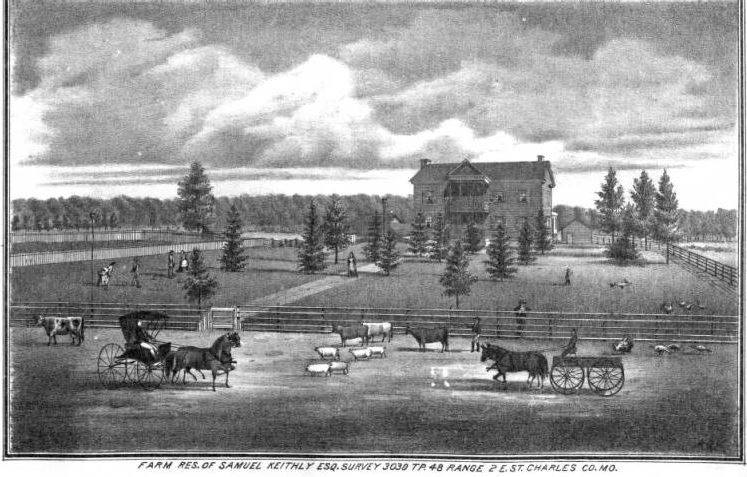
Keithly was one of the largest slave owners in St. Charles County according to the U.S. Slave Schedules of 1850 and 1860. Among those slaves were John Rafferty and his sisters Ludy, Elsie and Lizzie according to oral history.
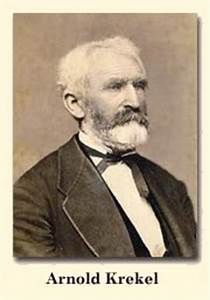
The Keithly farm directly adjoined land purchased by German emigrant Arnold Krekel to the northwest, of 320 acres, where the town of O’Fallon was founded in 1856. Arnold’s brother Nicholas Krekel would become the O’Fallon’s first postmaster and Station Agent when the North Missouri Railroad came through in the 1850s. In 1855, a German born attorney named Arnold Krekel, purchased 320 acres of land on which he platted a town named O’Fallon, naming it after the railroad magnate John O’Fallon in hopes that it would become a stop on the westward push of progress. He set up his younger brother Nicholas as the Station Agent and Postmaster, giving him credit as the town’s founder. This created the unlikely neighbors of the Keithlys and the Krekels, with yet one common denominator. Both Samuel Keithly and Arnold Krekel owned slaves in 1860. Yet there their stories parted. Arnold Krekel, President of Missouri’s Constitutional Convention would go on to sign its’ Emancipation proclamation ending slavery in the State on January 11, 1865.
Samuel Keithly didn’t free any of his slaves. Oral tradition states that he gave the land that we call Sage Chapel Cemetery to his slaves, where they worshiped in a field of Sage. Among Samuel Keithly’s slaves was John Rafferty. According to Mary Stephenson, who is a descendant, John Rafferty and his sisters, Frances, Ludy, Elsie, and Lizzie had been born in Kentucky, and brought to Missouri. (These are among at least 17 burials at Sage Chapel Cemetery that we know experienced Missouri’s Emancipation Day on January 11, 1865.
When John Rafferty (Senior) passed away in 1881, his former master Samuel Keithly (Senior) had already passed away as well. Burials had already been taking place on the former Keithly plantation, on land that had been inherited and was by then owned by his daughter Mahala Keithly Castlio (1817-1896) and her husband Jasper N. Castlio. We do know that in 1881, Samuel Kiethly’s daughter Mahala and her husband Jasper Castlio legally transferred property that included a small church building of the African Methodist Episcopal Church on today’s Sonderen Avenue and the cemetery which lay at its southern terminus to three A.M.E. Trustees.
So on August 20th, in 1881, Mahala and her husband Jasper, transferred to three Trustees of the African Methodist Church, namely John Rafferty’s close friend Walter Burrel, Joel Patterson and Taylor Harris, for the use of the preachers of the African Methodist Episcopal Conference (headed by St. John’s A.M.E. Church in St. Charles Missouri) one acre of land, which became known as Sage Chapel Cemetery, so that these African-American burials could continue to take place. That same deed conveyed a half acre (with a building) to be used as a church. Then former slaves, like John Rafferty and Charles Letcher could continue to be buried where their ancestors had already lain for decades.
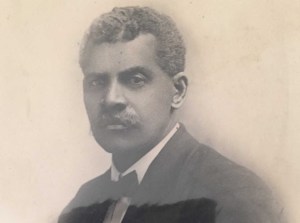
At the same time there was a traveling minister with the A.ME. Church Conference named Jefferson Franklin Sage that preached along the route of today’s Interstate 70 between the city of St. Charles and further west in Jonesburg. He would preach there for many years before moving on to Kansas in the late 1890s. And by that time, there were two other black churches along today’s Sonderen Street, where a large African-American community lived.
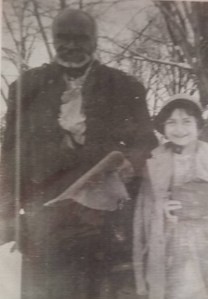
Nearby, Wishwell Baptist Church was begun in 1891 and was a plant of Hopewell Baptist Church that had begun in the 1850s south of Wentzville on the Boone’s Lick Road. Wishwell was near the creek, on the east side of Sonderen, close to Sage Chapel Church. The other African-American Church was Craven’s Methodist, begun in 1871, near the corner of Elm and Sonderen. Next to Craven’s, on the corner, was the town’s African-American school, and across the street was the “Colored Odd Fellow’s” lodge that met in Willis Thornhill’s house until Henry Obrecht purchased the property in 1910. All of these lay on today’s Sonderen Avenue, which ran north to south from the Wabash Railroad to Sage Chapel Cemetery near the former Keithly plantation. This was also the dividing line between the property of the Krekel Addition and the former Keithly’s until 1951 and the City’s annexation of property. This was the line for segregation.
By the early 1900s, the early road to St. Peters, which led from the railroad in O’Fallon, passing Sage Chapel Church and the cemetery, became known as “the Hill” because of the African-American community that lived along it. There was the Thornhill house where the colored members of the Oddfellows met, the black school house, and the two other

African-American churches. Many of those buried at Sage Chapel Cemetery were members of one of those three churches or of that community, that is today’s Sonderen Street.
By the late 1940s, many of the African Americans were moving away from O’Fallon in search of employment. The three churches would close, and have since even disappeared entirely, along with any records that may have existed.
Even though all three of these African-American Churches are no longer standing, and the buildings that once housed the black school and the Odd-Fellows lodge are largely

remodeled, Sage Chapel Cemetery still exists. Significant in today’s world where such places are so often lost and forgotten. A peaceful and quiet testament to a difficult time and such families as Hayden, White, Edwards, Thomas, Rafferty and Ball. While many of the community of African Americans left O’Fallon in the late 1950s and early 1960s in search of better job opportunities for their families, some remained. And while many of Sage Chapel’s residents died living in St. Charles, St. Louis or even as far as New Orleans, they were brought home to Sage Chapel when they passed. Eventually all three churches would use Sage Chapel to bury their families.
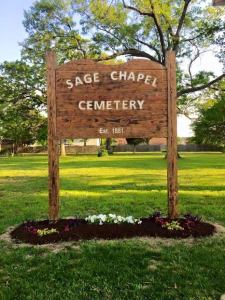
Today, the cemetery is owned and maintained by the City of O’Fallon and has 117 documented burials of which only 37 have headstones (2018). Of those documented burials at least 17 of them were individuals born enslaved. They personally experienced Emancipation Day for Missouri’s slaves on January 11, 1865. Many of these people had difficult lives and would experience segregation their entire lives. The story of the people of Sage, tells us of a time period that today’s living cannot recall. Oral family histories continue to share stories of these people’s lives, and their tragic deaths.
In 2018, Sage Chapel Cemetery was placed on the National Register of Historic Places. One of the largest cities in Missouri, O’Fallon is setting an example of how to honor its history, even the more difficult stories. This in turn leads to a greater understanding and a richer dialogue for everyone. Thank you O’Fallon, Missouri, a great place to live! My website sagechapel.com shares the stories of the “People of Sage” who lie buried there because “As long as a name can be spoken, that person shall not be forgotten.” And it is only through a recognition of that past, that we can continue to build a better future for all generations to come. This is my website, and if you wish to contact me with any additional information or stories please use this contact form https://sagechapel.com/contact/.
If you would like to receive more stories like this, you can subscribe to my blog below:
 ST. CHARLES COUNTY HISTORY
You must be logged in to post a comment.