ST. CHARLES COUNTY HISTORY

By Dorris Keeven-Franke

  • Daniel Boone

    Category: People

    While the village of St. Charles was first settled in 1769, it wasn’t until 1799, that one of the County’s most famous residents arrived. That September, Daniel Boone, made the journey with his wife, two daughters, and their husbands, and son Daniel Morgan Boone coming from Kentucky. His son, Nathan Boone soon followed, and they settled south of the village near the Missouri River. This was Upper Louisiana, under Spanish rule. The Spanish government wanted more settlers and would grant them land. They would also make Boone a commandant, or syndic of the Femme Osage District, where he would settle disputes that arose among the settlers there. He was famous for holding court at the home of his son Nathan, under a tree, called the Judgement tree.
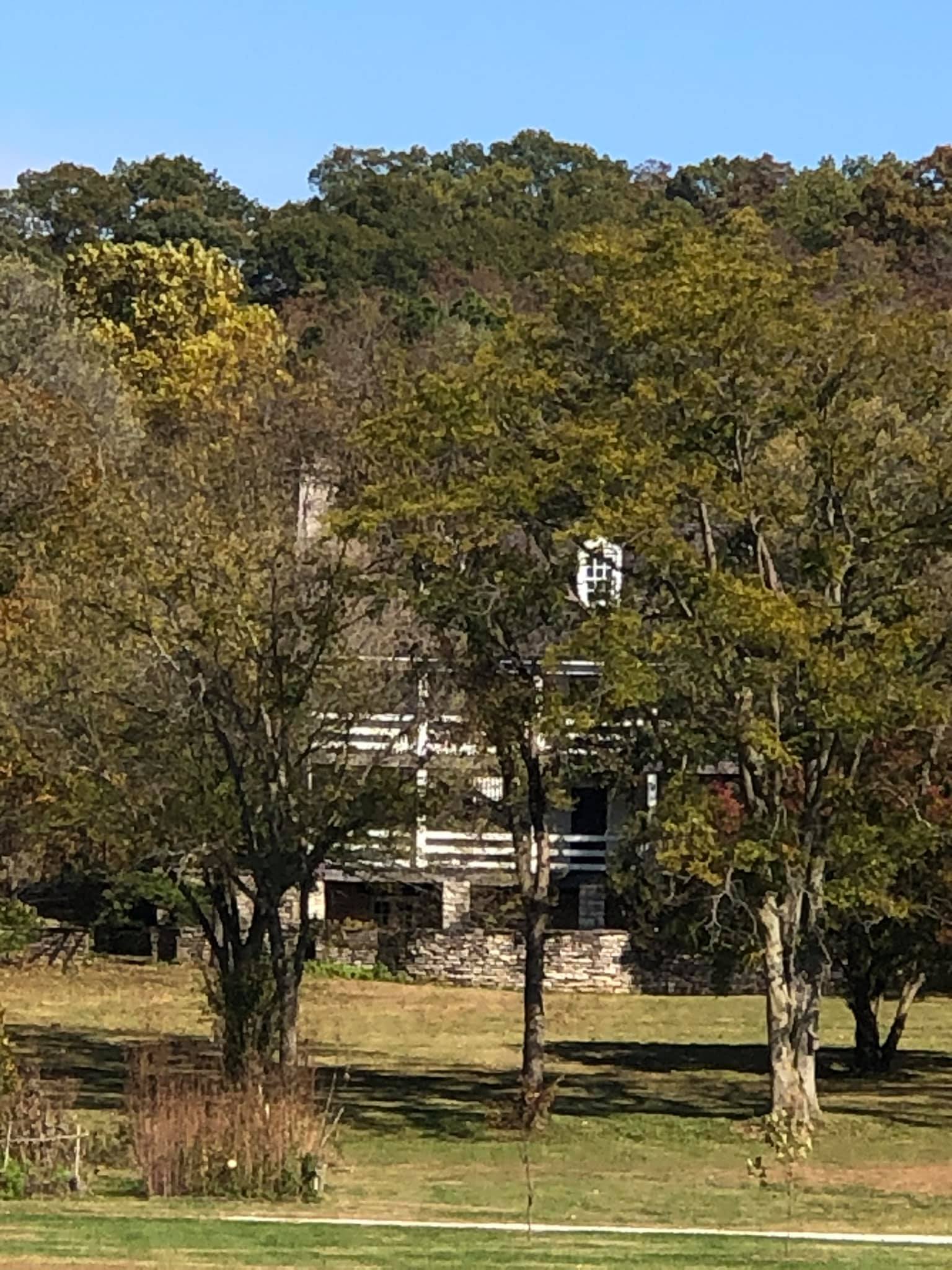
    Photo by Dorris Keeven Franke For more about the home see https://www.sccmo.org/1701/The-Historic-Daniel-Boone-Home

    The Spanish had encouraged Boone to suggest the territory to his relatives and friends. Others that had obtained Land Grants from the Spanish were Warren Cottle, John Pitman and Jacob Kunze who had settled further north of him along Dardenne Creek (Cottleville). The Zumwalt and the Audrain families who had settled over along the Peruque River (O’Fallon). Both flowed into the Mississippi River. Many of these families had come from Kentucky and Virginia, bringing their enslaved property with them. They were carving homes out of the frontier, a wilderness that was already home to the Osage, Pottawatomie, Sac and Fox Nations.

    Daniel Boone. Boone sat for artist Chester Harding shortly before his death in 1820. It is the only known portrait of Boone painted from life. [National Portrait Gallery, Smithsonian Institution, NPG.2015.102]

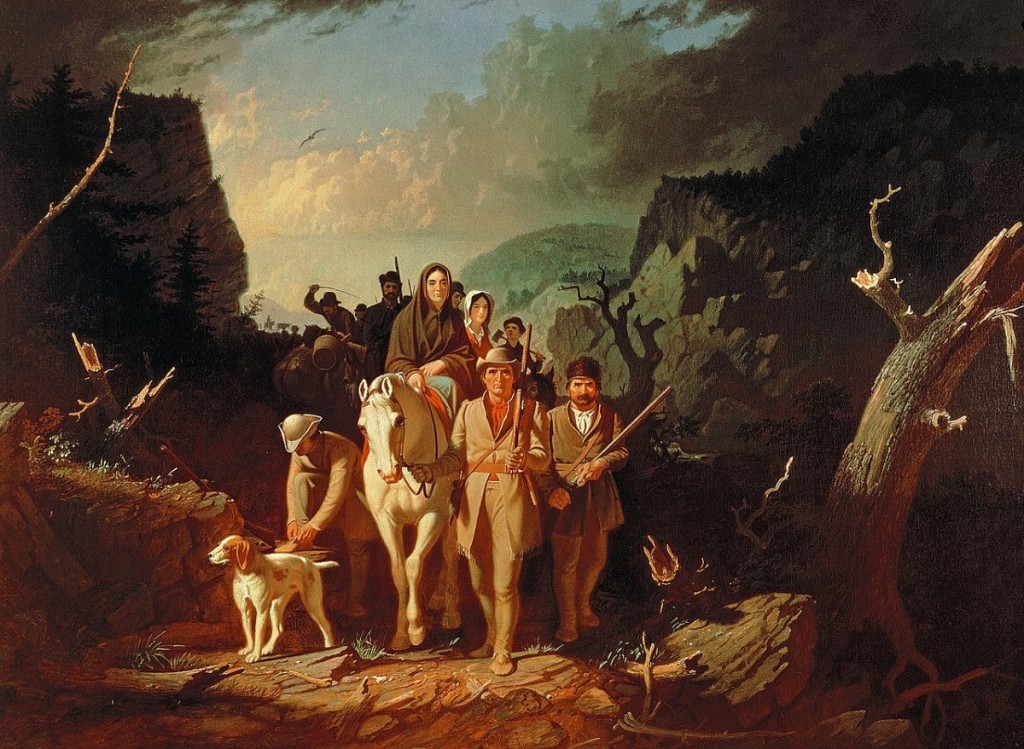
    Cover Photo: George Caleb Bingham’s painting Daniel Boone Passing Through the Cumberland Gap (1851–1852) depicts the famous frontiersman leading his family and settlers through the Cumberland Gap at the junction of Virginia, Kentucky, and Tennessee. 
  • May 27, 1815

    Category: Events

    On Saturday, May 27, 1815, the Missouri Public Gazette published the extract of a letter from Captain David Musick of the St. Louis County Rangers to Col. William Russell, Commander of this District, dated Lower Cuivre Ferry, May 25, 1815. “About eleven o’clock yesterday, we were alarmed by the firing of guns in the direction of fort Howard, and immediately mounted such horses as were within reach and proceeded in full speed to the assistance of Cap Craig whom we found closely engaged with the Indians and pretty equally matched with respect to number.

    Having arrived in good season, just on the rear of the Indians, who immediately broke and ran; a part of them retreated into a sink-hole and baffled every art to get them out, as they had a better chance to kill than to be killed. The affair commenced as followed-

    Five men that were detached in a canoe, to convey some necessaries to the fort received a heavy fire from a party of Indians concealed in the bushes near Cottles field, three were killed dead, the fourth received a tomahawk in his head and died this morning; the fifth made his escape and was pursued to the Fort by the Indians. Captain Craig and a party ran immediately to the assistance of the canoe, and compelled the Indians who had possession of her to retreat to the woods, where they made a stand and fought him. Captain Craig was killed at the commencement of the engagement, a man of the name of Gibbony was killed close to him, three others in his company were wounded; also a citizen who shared in the action received a wound, supposed mortal.

    In the height of the action, I arrived in the rear of the Indians, and attempted to surround them, but they broke and and took possession of a sink hole, where they were secure from our fire. A battery (or blind) was hastily made on the wheels of a cart and ran up to the mouth of the sink, but the men could not discover an Indian, although at that moment Lieut Spears was shot dead near the wheels, which induced the men behind the moving battery to retreat and leave him, as it was certain death to all who would attempt to bear him off the ground.

    All our exertions to dislodge the enemy was unavailing as they were entirely covered from our view. During the action, another party attacked the Fort but could not make no impression. Five Indians were found dead on the spot, and a number of their wounded were trailed to Bobb’s creek, where their canoes were moored. We lost this affair several brave men, I give ehm in the order they fell, viz.

    Killed in the Canoe

    Hubbard Tyon, Antoine Pelky, and Francis Larame, of Cap Craigs company, and George Burns, formerly of my company (discharged.)

    Killed at the battle ground.

    Captain Craig, Alexander Gibbony and Lieut. Spears; the latter at the mouth of the sink, endeavoring to dislodge the Indians.

    Wounded

    John Patterson and Mr. M’Cormick the latter a citizen, mortal. –Corporal Abraham Lettz and Benj. Hail, supposed not mortal. – Charles Cardinal is missing, supposed to be killed.

    I cannot say too much in praise of the gallantry of the officers and men under my command, both in the attack, and exertions to dislodge the enemy from their retreat in the sink hole.

    Messrs M’Cormick. Ira Cottle, James Woods and Rob. M’Clelland, citizens deserve credit for their spirited exertions in this affair. I had only 18 or 20 men with me; Cap. Craig had about 39 of his company.”

    Source: Missouri Gazette and Public Advertiser (St. Louis, Missouri) Saturday, May 27, 1815, Page 3

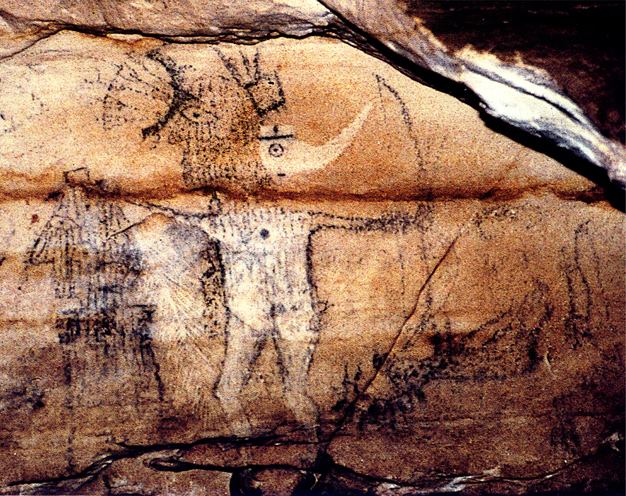
    Image from Picture Cave, Missouri of “He Who Wears Human Heads as Earrings” also known as “Gets Hit With Deer Lungs.” In Ho-chunk (Winnebago) tradition this figure is called “Red Horn.” Though hard to see details, the face painting of this hero/deity matches that of the Osage Wa-ho-beck-ee. Other aspects of this image correlate with Osage and other Siouan tribal traditions. Photo Credit: Michael Dickey

  • Giessen Emigration Society from Germany

    Category: People

    In St. Charles County, many families have ancestors from Germany, and some have come from as early as the 1830s. Some families, like the Krekel, came individually, on their own. Some would join emigration societies, and come in groups for safety concerns. This was a recommendation of the author named Gottfried Duden, who wrote a book published in Germany in 1829, called A Report on a Journey to the Western States of North America. [The book was translated and published by Goodrich, James, State Historical Society of MO in 1980] which extolled the virtues of Missouri and especially this area. During the 1830s, over 120,000 Germans would emigrate to United States, because of the conditions in Germany. Hundreds of books on the subject were being published in Germany on the subject but no one but Duden had actually ever visited Missouri as he did from 1824-1827. One-third of those emigrants would settle in Missouri because of his book. Many of them would settle in St. Charles County.

    In 1834, the largest organized German emigration group to ever set out for Missouri arrived called the Giessen Emigration Society. They came from small villages and large cities, were Catholic, Protestant, Jewish and Free-Thinkers. They were lawyers, doctors, and teachers; and blacksmiths, tanners and farmers as well. They were organized, with good character references, who had pledged their entire life savings to join others with the same dream – Freedom and America! This was the life that they had sought for long.

    These  five-hundred Germans emigrated to the United States, with an intention to establish their own state. Decades of revolutionary struggles had failed, convincing them that the power of their rulers could not be broken, for the time being. Yet, as passionate democrats, they were determined to establish a new German Republic – in North America. This bold, now almost forgotten, venture of the Giessen Emigration Society, was an event much-discussed across Germany at that time.The Society’s founders were unable to achieve their goal they had stated. However they did find the conditions right to contribute to the strong democratic beliefs they found in the fertile United States. Settling in Missouri, they began to create a lively intellectual center that exists even to this day. They led in the struggles against religious intolerance, and fought to abolish slavery during the Civil War. They promoted the State’s rich viticultural assets, and encouraged further emigration, ultimately achieving a State rich with German heritage, that still exists today.

    In St. Charles County, members of this huge emigration group created various settlements, such as Hamburg and St. Paul, they turned earlier American settlements such as Cottleville and Augusta into German Settlements. These new emigrants in turn wrote letters home to their friends and relatives bringing even larger waves to settle here.

    In Today many family historians are discovering their connection to this brave group of immigrants. You can read the translation of the Call for Emigration or see the actual ship lists with their names. The Missouri Germans Consortium helps those looking for more! There you can read more about the history of the Giessen Emigration Society or find a list of their members.

    To learn more about Gottfried Duden see https://mo-germans.com/2024/05/19/gottfried-duden-2/

    For more about the Giessen Emigration Society see https://mo-germans.com/the-giessen-emigration-society/


    Like what your reading? Subscribe and receive an email whenever a new post is published.

    Join our group on Facebook https://www.facebook.com/groups/1260908361672045