ST. CHARLES COUNTY HISTORY

By Dorris Keeven-Franke

  • Sage Chapel Cemetery Revisited

    I first wrote about Sage Chapel Cemetery back in 2018.

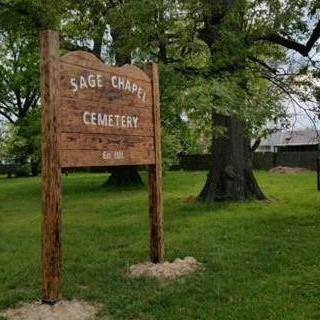
    Near the center of one of the largest cities in St. Charles County  sits a quiet little plot of ground that transports a visitor to an earlier time when many of its residents were enslaved people. In the early 1800s, Samuel Keithly (1789-1870) came from Kentucky, and settled in St. Charles County, bringing his slaves. The father of a large family with seven children, several step-children, and many grandchildren, the family had other members who owned slaves as well. By the 1840s, the family owned hundreds of acres of land, and had purchased  land near today’s O’Fallon, Missouri where Sage Chapel Cemetery lies. (First published April 27, 2018)

    Not much has changed since then, but their story is more important than ever. For years, the history of the formerly enslaved people of St. Charles County was a story that only they knew, shared among themselves, and passed down to younger generations. Their ancestors were forbidden to learn how to read and write until emancipation. How can we fault people for not having enough documentation about a time and place, then require them in order to recognize it, and not credit their family histories passed down from generation to generation? When I share the story of Sage Chapel Cemetery I want to share not only the “documentation” found in their enslaver’s probate and wills, the legal deeds to purchase the land they built on, and the death certificates that can be found today, online through the Secretary of State’s office, but those family histories that only they can tell. There’s the real heart of the story!
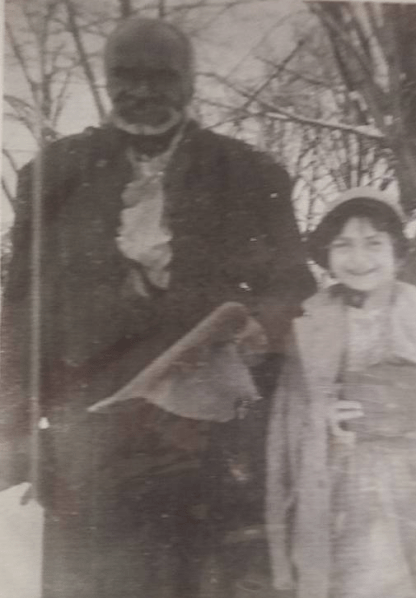
    Charles Letcher, Ancestor of Mary Stephenson

    Oral Histories, as told by their descendants, provide an incredible journey into the past that no deed, will or death certificate can tell. In my research on Sage Chapel Cemetery, I met Mary and Tom Stephenson. Mary shared the same kind of family portraits of her ancestors, hung in the hallway, that I have of mine. However, her stories told me about more about Mr. Keithlys enslaved people who he brought to Missouri. Those are the real stories. Those are the stories that bring Sage Chapel Cemetery to life. And those are the stories that we need to hear. Let’s revisit Sage Chapel, and “the hill” in O’Fallon.
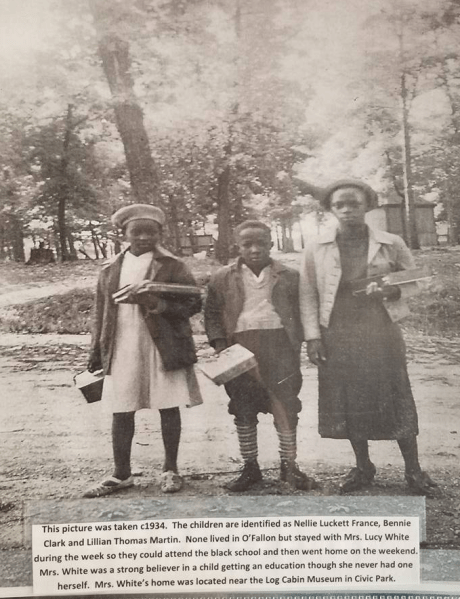
    Daughter of Les Luckett is the first to the left, Nellie Luckett. Photo from the O’Fallon Missouri Historical Society the Mary Stephenson collection and Jim Frain.

    Please note: These stories are difficult and they share history that some consider divisive and unnecessary. But we are instructed to tell stories that educational and inspirational. These are true stories, shared with the permission and the respect of those who have shared them with me.

    If you would like a daily email with my stories of St. Charles County History you can subscribe (its free) right here…
  • Early French home later used in Civil War

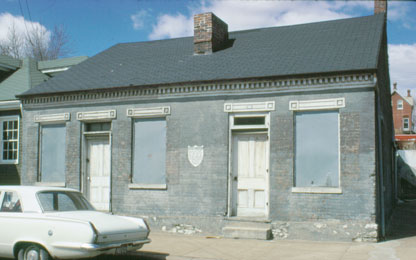
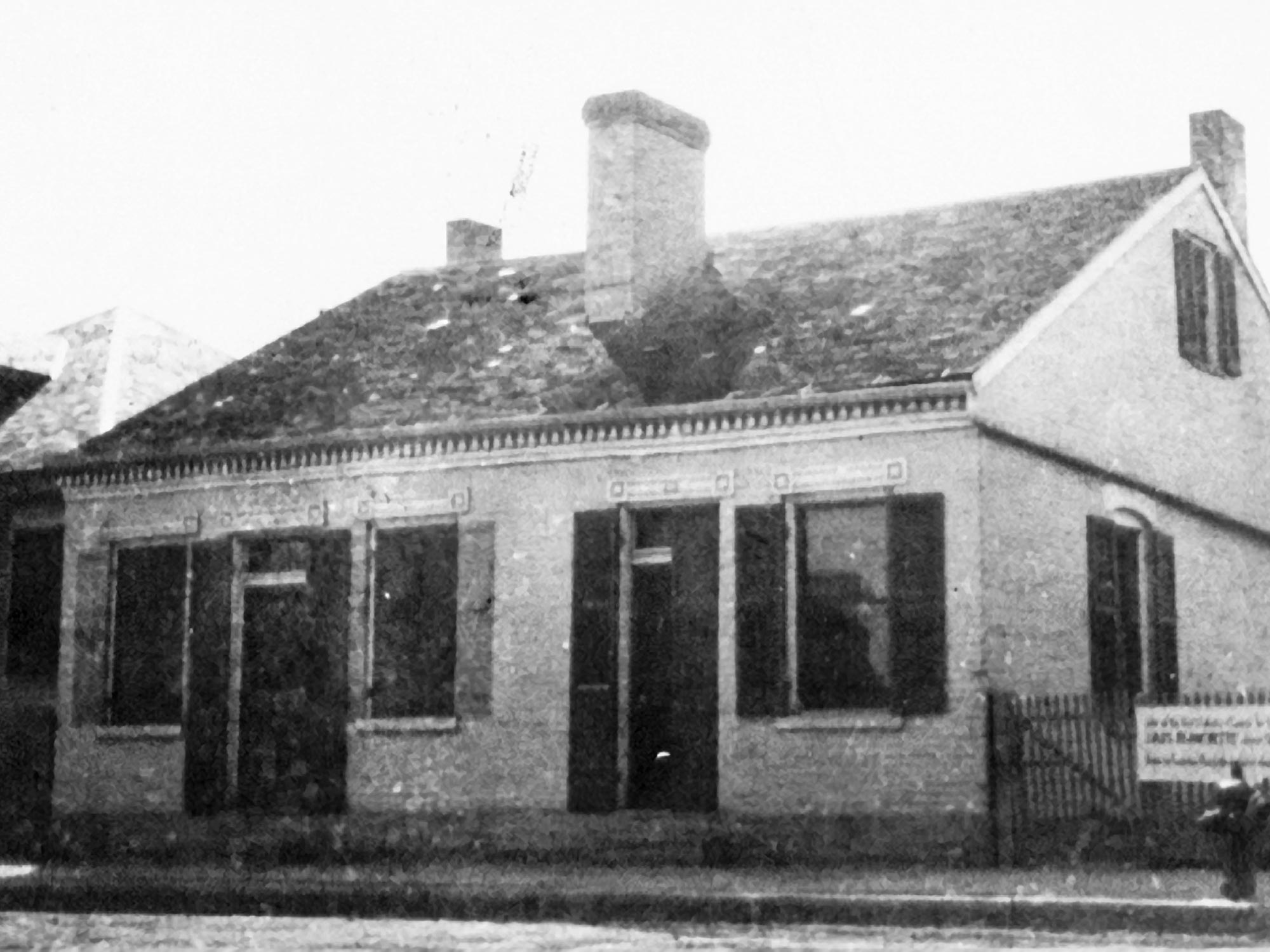
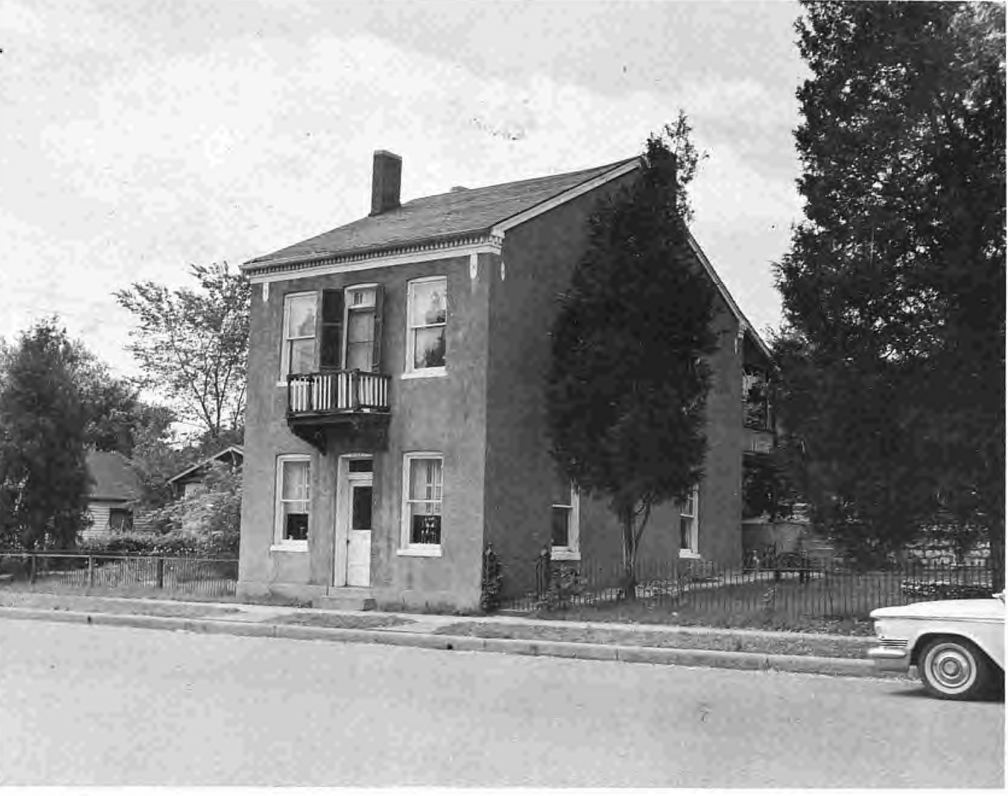
    At 903 S Main St, Saint Charles, Missouri, 63301 there is the Tiercerot- Krekel house, this two-and one half story home was built, circa 1814-1830 by a French merchant named Gregorie Kircereau who was a nephew of St. Charles’ second Commandant Carlos Tayon.  The beautiful brick building is stucco covered, and still retains its beautiful stone lintels.

    During the Civil War the German born Provost Marshall Arnold Krekel , a Union Army Lt. Colonel used it as his headquarters. It was located across the street from the town’s Mill, which was also used as a Union hospital and a Confederate Prison, and where soldiers kept watch on the riverfront. We’ll save more of that story for another day. The third floor’s “Crow’s Nest” similiar to the crow’s nest of a ship was used by Krekel as a lookout. Missouri was under Martial Law during the Civil War.

    Directly to the rear of this building there is a brick building that served as the kitchen and contains a built in stove with a large open oven. Between Kircereau’s home and his Uncle Tayon’s brick house (see yesterday https://stcharlescountyhistory.org/2025/06/27/the-commandant-and-his-church/) which was directly to the west, was a building that was said to be used by their enslaved.

    Prior to 1851, the Boone’s Lick Road started westward, on the north side of the property. When the Plank Road system began, the orientation of the road began on the south side like it does today. Today, you can visit Magpie’s Cafe and enjoy history up close! https://www.magpiesonmain.com/

    Sources: Preservation Journal by Holly Haddox, Historical Saint Charles Missouri by Edna McElhiney Olson 1967, Boone’s Lick Road by Dan A. Rothwell. Also: Historic Main Street Story Map

    You can subscribe for free and receive more stories each day of St. Charles History in your email box!

  • The Commandant and his Church

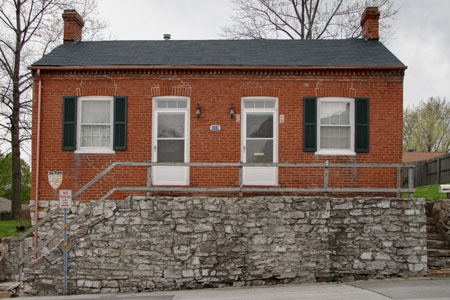
    Tayon House 119 McDonough St – Said to have been built in 1791 by Don Carlos Tayon, the second Commandant of the District of Saint Charles. He served following the death of Louis Blanchette in 1793, until 1802 with the appointment of James Mackay. Considered to be a great example of French style architecture , the basement floor of today’s building, with its’ brick floor, was actually the first floor at that time. Inside the original first floor, with a ceiling of hand-hewn beams was where lavish Cotillions were given when Saint Charles hosted the Corps of Discovery in 1804. Later the building became the home of Presbyterian Minister Timothy Flint, whose honored guest was once the famous author Washington Irving who would share the setting of this visit in his several of his books. 

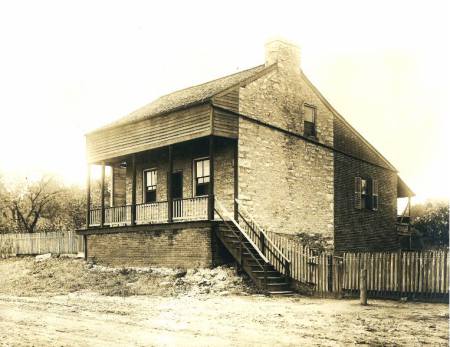
    James Mackey 1017 S. Main Street

    Timothy Flint was a Presbyterian Minister, who would bring the church, Solomon Giddings and Elijay Lovejoy to St. Charles. It is said that in 1804 when Lewis and Clark began their journey, that in their journals they chronicled ” only one brick house. ” Yet both Tayon’s and Blanchette’s house were supposed to have been here and they are both brick. There were over 100 families here by that time too. We do know that Lewis and Clark also attended church here.

    119 McDonough

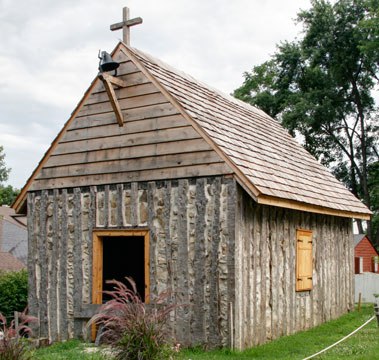
    Borremeo Catholic Church

    Behind 401 S Main St, Saint Charles, Missouri, 63301

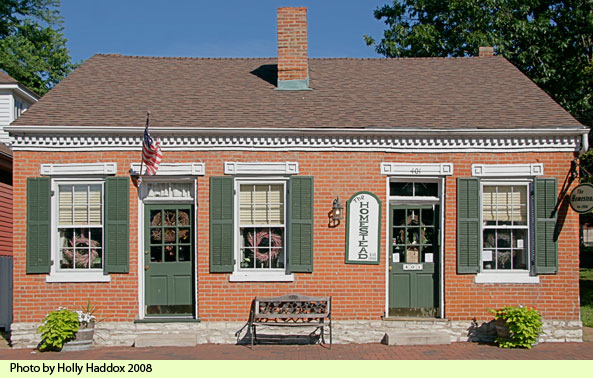
    The brick duplex (401 S. Main) Circa 1828 (Grandma’s Cookies – Everyone’s Favorite!) – was built in the French style between 1818 and 1828 by Father Van Quickenborne who served as the priest at the Borromeo Catholic Church, which was located to the west of this building. In 1789, the citizens of Les Petites Cotes had petitioned the King of Spain for permission to build a church. Approximately 30 men gathered at the house of Louis Blanchette in the presence of Don Manuel de Perez, Lieutenant Governor and Commandant of the District, to sign the document. Nearly all signed with a mark, including Blanchette who served as the local commandant. The petition stated that a church be constructed of vertical logs set in the earth and measure 40 by 30 feet. Don’t forget to look behind for the church.

    Would you like a daily email with St. Charles County history right in your inbox?

    © Dorris Keeven Franke 2025