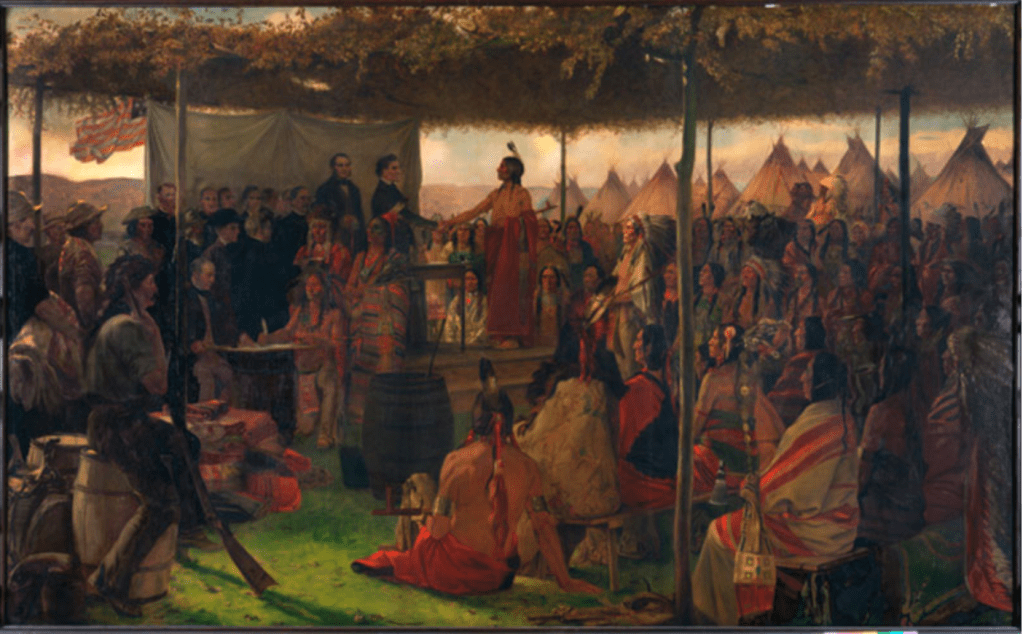
Written by Michael Dickey – Former Site Director, Arrow Rock State Historic Site, Missouri Department of Natural Resources for the Program: April 25, 2015 Conflicted Perspectives Symposium, St. Charles County College and the Peace and Friendship Commemoration on September 15, 2015.
President James Madison appointed William Clark, Illinois Territorial Governor Ninian Edwards and U.S. Indian Agent Auguste Chouteau as Indian Peace Commissioners and they were convened from May 11 through September 28. They were appropriated $20,000 in trade goods to use as presents for the Indians.[19]
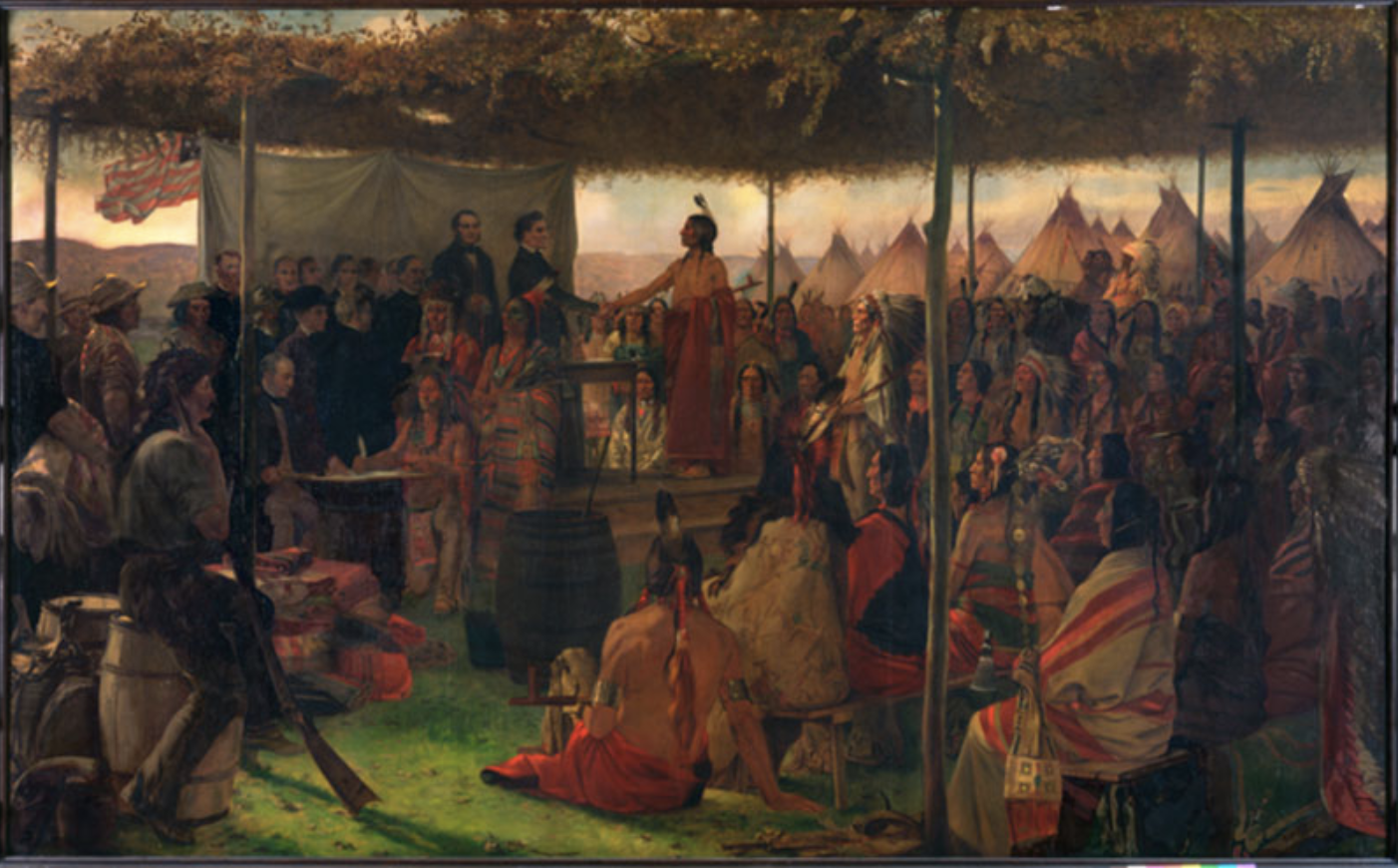
They invited about 19 western tribes (some were actually bands of tribes) to meet and council at Portage des Sioux. This location was convenient to the tribes on the Missouri, upper Mississippi and Illinois Rivers, and it was far enough from St. Louis and St. Charles so as not to impact the daily activity of the citizenry. Fort Belle Fontaine was only a few miles away and its 275 troops were deployed to the treaty grounds. In early July about 2,000 Indians began gathering at the site. Leaders the pro-British faction of the Sac & Fox did not show up. Leaders of a dozen tribes signed the treaty but others such as the Menominee and Winnebago did not until the following year. Even though the Osage had not fought against the United States they were compelled to affirm their loyalty and re-affirm the treaty of 1808. Eleven chiefs of the Big Osage, one Arkansas Osage chief, eleven Little Osage chiefs and one chief of the Missourias attached to the Little Osage signed the peace treaty on September 12, 1815 which followed a short, simple template:
A treaty of peace and friendship, made and concluded between William Clark, Ninian Edwards, and Auguste Chouteau, Commissioners Plenipotentiary of the United States of America…of the one part; and the undersigned King, Chiefs, and Warriors, of the Great and Little Osage Tribes or Nations…of the other part.
THE parties being desirous of re-establishing peace and friendship between the United States and the said tribes or nations, and of being placed in all things, and in every respect, on the same footing upon which they stood before the war, have agreed to the following articles:
ARTICLE 1. Every injury, or act of hostility, by one or either of the contracting parties against the other, shall be mutually forgiven and forgot.
ARTICLE 2. There shall be perpetual peace and friendship between all the citizens of the United States of America and all the individuals composing the said Osage tribes or nations.
ARTICLE 3. The contracting parties, in the sincerity of mutual friendship recognize, re-establish, and confirm, all and every treaty, contract, and agreement, heretofore concluded between the United States and the said Osage tribes or nations.[20]
At first glance, the wording of the treaty seems harmless enough. No land cessions were required and annuities were not withheld as punishment for any damages attributed to individual Osages during the war. However, the Osages did not regain “the same footing upon which they stood before the war.” Fort Osage reopened that fall, but they did not relocate there. The war had changed the climate of the nation. News of the Portage des Sioux treaties sent a message to residents of eastern states; it was now safe to emigrate and homestead in the Missouri Territory. From 1816 to 1820 settlers “came like an avalanche” wrote missionary John Mason Peck. “It seemed as though Kentucky and Tennessee were breaking up and moving to the Far West.”[21] The treaties also had political ramifications. Missouri filed for statehood in 1820 and William Clark failed in his election bid to become the new state’s first governor. Voters viewed him as being “too soft” on the Indians at Portage des Sioux.[22] Missourians it seems, were not willing to “forgive and forget” as the treaty had stipulated. The Shawnee, Delaware, Kickapoo, Peoria and Cherokees were assigned to reservations abutting the Osage boundary and they frequently hunted on the Osage side of the line. Pressured by the growing settlements of whites and dispossessed eastern tribes, some Big and Little Osage as early as 1808 began joining their Arkansas kinsmen or relocating to southeast Kansas. After 1815 the departures accelerated. The last group of Big Osage remaining in Missouri abandoned their village in the summer of 1822.[23] On June 2 of 1825, the Osage signed a treaty at St. Louis, by which they ceded the remainder of their territory in Missouri, Arkansas, Oklahoma and much of Kansas[24]
Jefferson’s plan of coercion through commerce had worked, though not exactly as he envisioned it. The treaty of Portage des Sioux reaffirmed the process of depriving the Osage of their land and it opened the door for a flood of settlers who rapidly filled the old Osage domain and clamored for more. At the beginning of 1808 the Osage dominated nearly 1/8th of the Louisiana Territory but in just 17 years, they were left with a reservation only 50 miles wide and 150 miles long in southern Kansas. The Treaty of Portage des Sioux which meant peace to the United States only added to the change and turmoil being experienced by the Osage Nation.
Endnotes
[19] March, David. The History of Missouri Vol. I. Lewis Historical Publishing Co. New York 1967, p. 303
[20] Kappler, Charles J. Indian Affairs Laws and Treaties Vol. II Washington, Government Printing Office, 1904. Treaty With the Osage 1815 http://digital.library.okstate.edu/kappler/Vol2/treaties/osa0119.htm
[21] Babcock, Rufus, ed. Forty Years of Pioneer Life Memoir of John Mason Peck D.D. Carbondale and Edwardsville: Southern Illinois University Press, 1965 p. 146
[22] March, p. 305
[23] Burns, p. 50
[24] Kappler, Treaty With the Osage 1825 http://digital.library.okstate.edu/kappler/Vol2/treaties/osa0217.htm
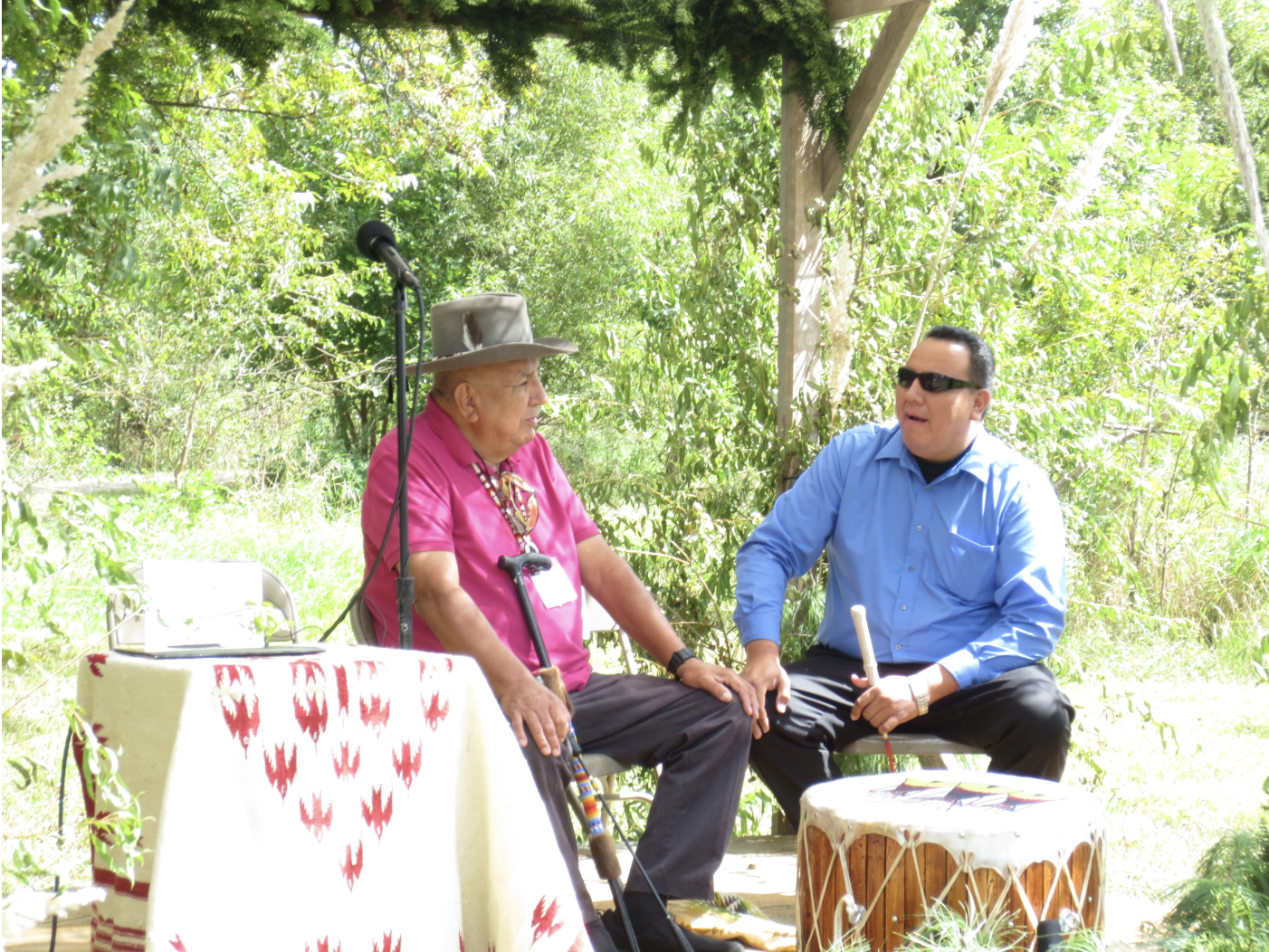
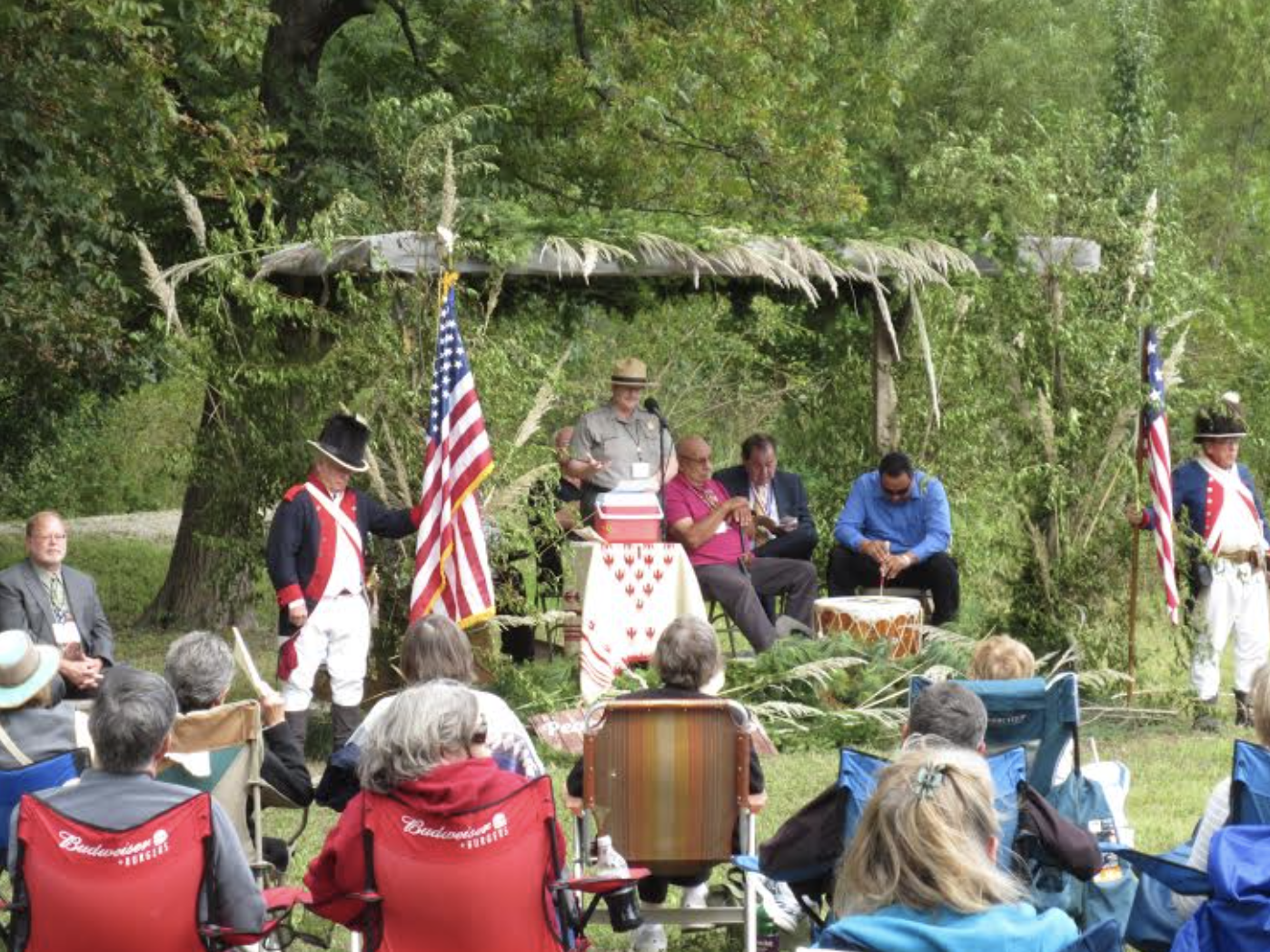
On September 15, 2015, the Commemoration of the Peace and Friendship Treaties took place at the same location as the original signing, Portage des Sioux in St. Charles County. Present were St Charles County Executive Steve Ehlmann, Osage Nation’s Chief Standing Bear, and William Clark’s descendant Bud Clark.
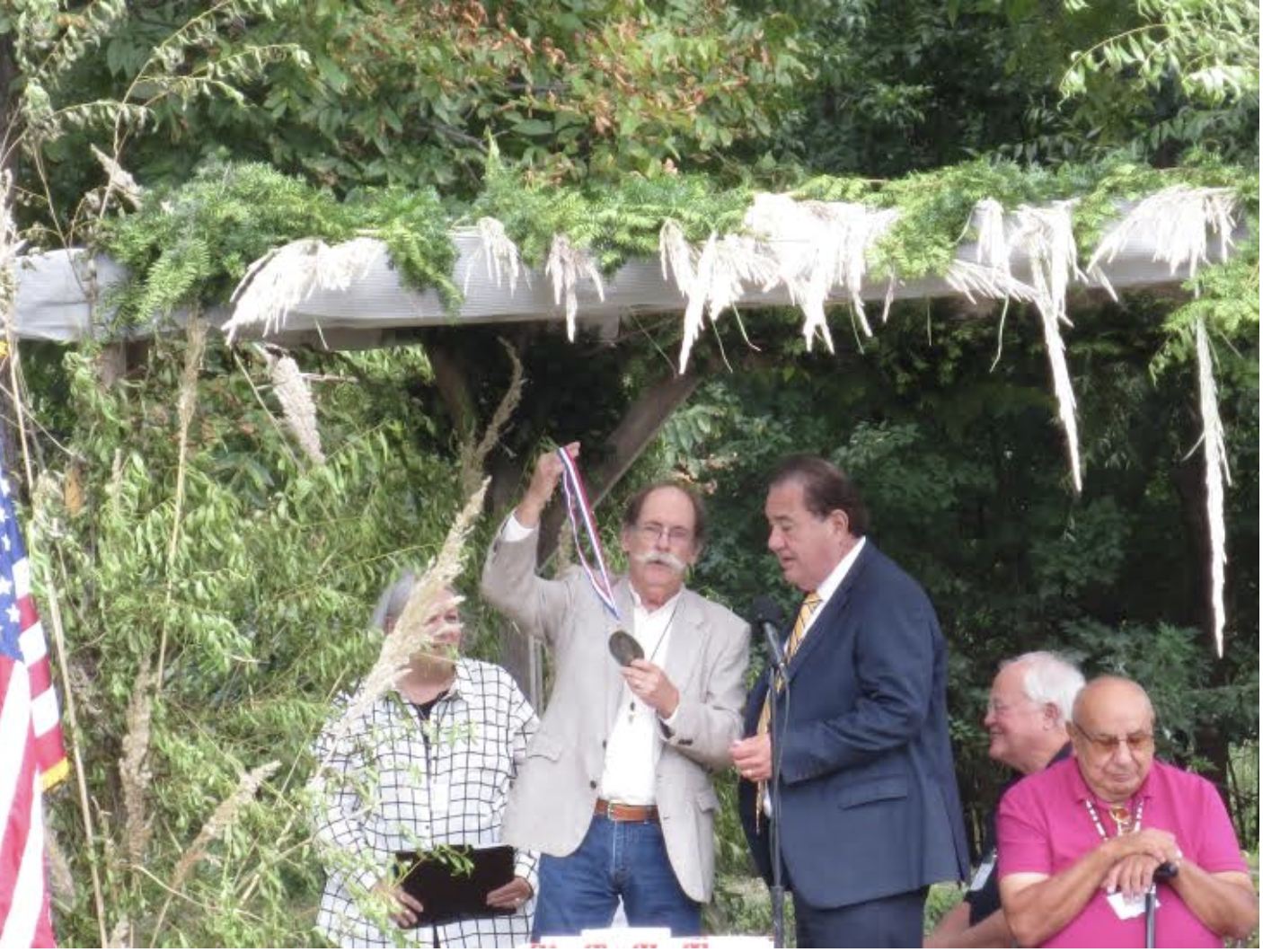
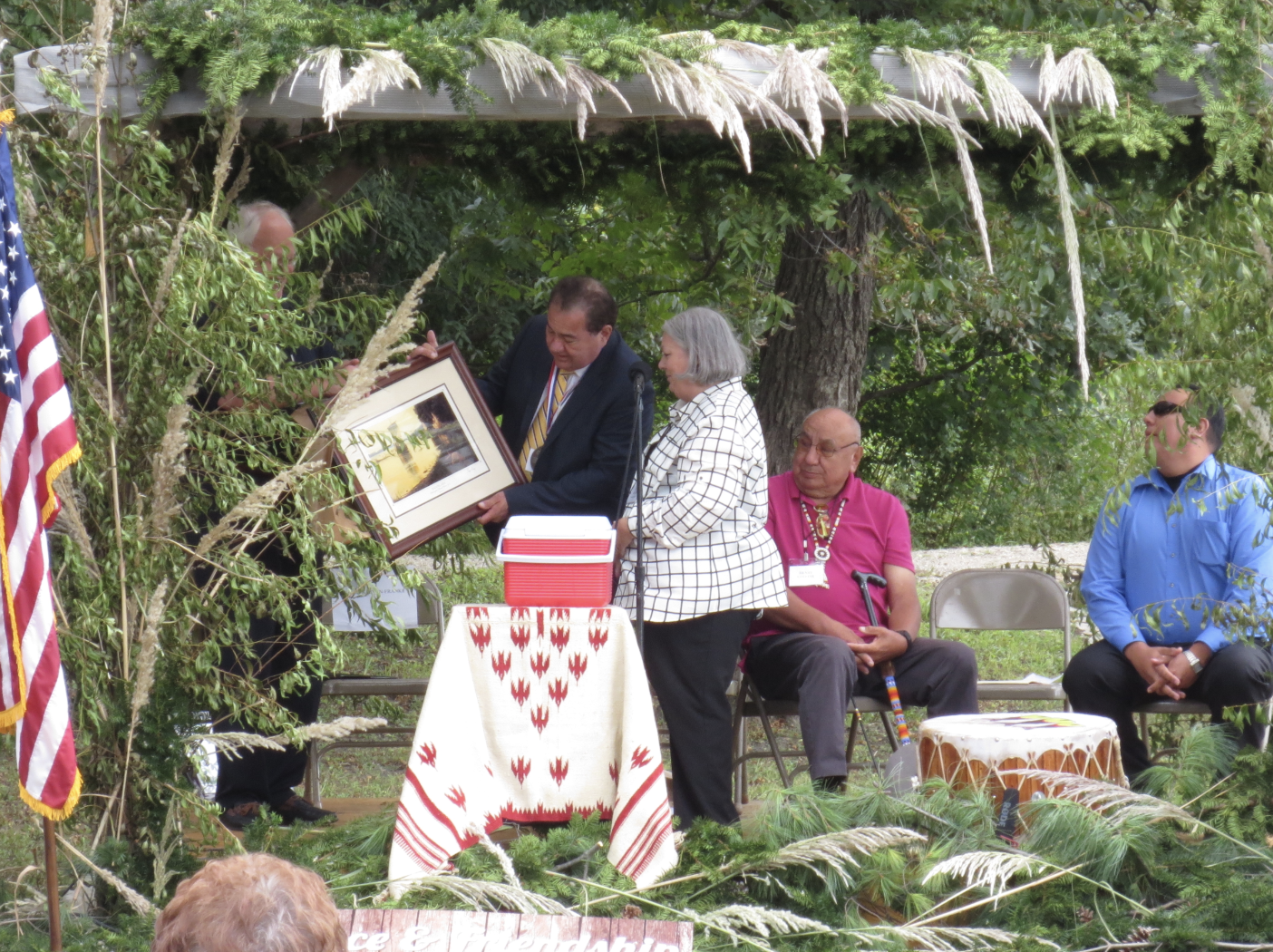
By Dorris Keeven-Franke
 ST. CHARLES COUNTY HISTORY
You must be logged in to post a comment.