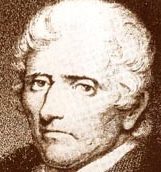
Here on the frontier in 1815, Daniel Boone’s grandson James Callaway (1783-1815), had taken command of Nathan Boone’s company of Rangers at Fort Clemson on Loutre Island (Located at today’s southwestern Warren County border across from Hermann, MO). They were about to mount another campaign, so Callaway had sent many of his men home to prepare, when the alarm came that Sauk and Fox had stolen several horses. Callaway gathered his men still at the Fort and took out in pursuit westward. They followed their trail up the dry fork of the Loutre, and discovered an abandoned Indian camp, with just their horses and a few Indian women there. They retrieved their horses, and turned towards home, with some believing that to return the same way would take them into a trap. It did. As they forded a creek, they were fired upon and Capt. James Callaway was shot. He and five other lives were lost that day.
In May of 1815, atrocities against the settlers continued, despite the events in the East. One of the worst happened when a band attacked the Ramsey family (near Marthasville, Warren County), murdering and scalping the entire family, except a two year old and an infant. The final battle here came on May 24, 1815 with the Battle of the Sinkhole, when Black Hawk and a band of Sauk attacked Fort Howard.(near Old Monroe, in Lincoln County MO) north of the Cuivre River. An ambush on a group of Rangers led to a prolonged siege in which seven of our Rangers were killed.
Finally, word reached the frontier about the end of the war that had happened five months before. President James Madison called for a Treaty to be made with the Indians, and selected Portage des Sioux for the location on September 15, 1815. He appointed Gov. Wm Clark, Illinois Gov. Ninian Edwards, and Col. Auguste Choteau to handle the affair. With the U.S. showing their strength with Col. John Miller and his Third Infantry, and almost the entire force under Gen. Daniel Bissell stationed at Ft. Bellefontaine in place, the drums began to roll. The tribes began arriving July 1st and negotiations lasted for months, with Black Hawk never signing. But the War of 1812, our Indian War, was finally over.
 ST. CHARLES COUNTY HISTORY