
Around 1822, a schoolteacher named Anthony C. Parmer sold his two story brick building at 301 South Main Street to a prominent physician from Vermont named Dr. Seth Millington. Seth, and his brother Jeremiah were prominent residents in the early village of St. Charles, but Seth would pass away from the Cholera epidemic on August 4, 1834. At the time of his death Seth Millington’s estate would include nine enslaved African Americans. The instructions left in his will was for them to be taken to Liberia.
Seth and Jeremiah had a sister Sarah also called “Sally” who had married Thomas French but she had become widowed in 1835 and she had gone to stay at Seth’s former home in 1837. Sally and Thomas French’s daughter Celia had married the former St. Louis editor Elijah P. Lovejoy, who was a well-known abolitionist and newspaper editor, in addition to being a Presbyterian minister. On October 3, 1837, Elijah Lovejoy had just finished giving a talk at the Second Street Presbyterian Church and was visiting the home of his mother-in-law with his wife and baby. The church was just up the street (where today’s SSM St. Joseph Hospital is today) and only a block away from Sally French’s apartment.
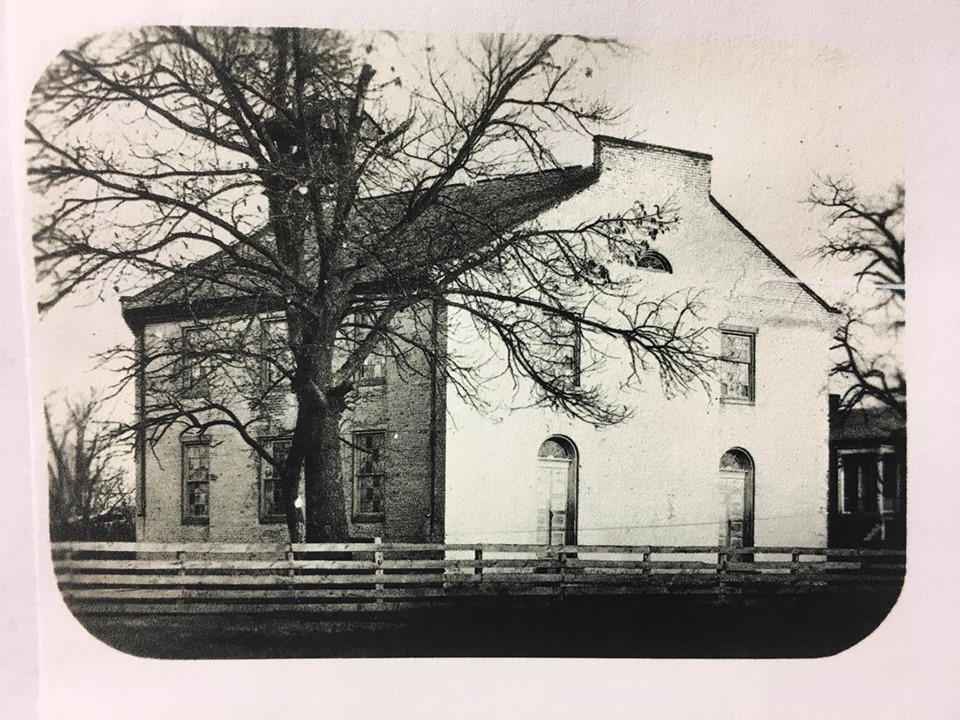
When Lovejoy had left the church a few minutes before, he had been passed a note of warning written by his close friend William M. Campbell, warning him that he was in danger. Campbell said that a large group of men were about to visit his mother-in-laws upstairs home (at 301 South Main Street, today’s Goellner Printing) and suggested that Lovejoy and his family leave St. Charles immediately. Campbell, whose home and office was just down the street (201-207 South Main Street), was a fellow member of the Presbyterian Church. Campbell was also an attorney, and executor of the estate that included Archer Alexander (1806-1880), his wife Louisa, and their children. A few minutes later, a large group of angry men arrived at Sally French’s door to her upstairs apartment in the former Millington house, and the mob was just about to attack Lovejoy, when his wife fainted and the men fortunately chose to retreat.
Lovejoy’s close friend George Sibley (1762-1863), whose wife, the former Mary Easton (1800-1878), had founded the girls school called Linden Wood, which was just a short distance away, would lend Lovejoy a horse. That night Lovejoy would quickly leave St. Charles, and make his way back across the Mississippi River to his home in Alton, Illinois.
After the burning of Francis McIntosh on April 28, 1836 in St. Louis, Lovejoy had championed the end of lynchings of Black Americans and the abolition of slavery, in his newspaper the Alton Observer saying,
“As long as I am an American citizen, and as long as American blood runs in these veins, I shall hold myself at liberty to speak, to write and to publisher whatever I please, being amenable to the laws of my country for the same.”
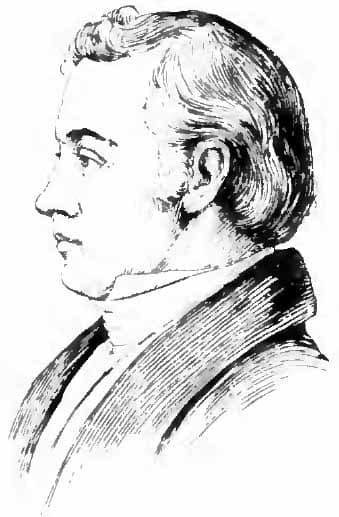
Sadly, it would only be a few weeks later though when Lovejoy was revisited by another angry mob on November 7, 1837, in Gilman’s Warehouse in Alton. There Elijah Lovejoy was shot and murdered while trying to save his press, which had been thrown into the river. Lovejoy has often been referred to as a martyr and the founder of the “free press” in America, a right guaranteed to all citizens under the First Amendment of the U.S. Constitution.
The formerly enslaved John Richard Anderson is said to have witnessed the whole event, as he was working as a typesetter for Lovejoy at the time. Anderson was a former slave of the Bates family, who after being emancipated, would learn how to read and write and later become a Baptist minister, like his close friend John Berry Meachum. (Both of them are buried at Bellefontaine Cemetery and Arboretum in the Baptist Minister’s Lot, purchased by the Baptist minister John Mason Peck.)
Subscribe to this blog for more stories…
 ST. CHARLES COUNTY HISTORY
You must be logged in to post a comment.