
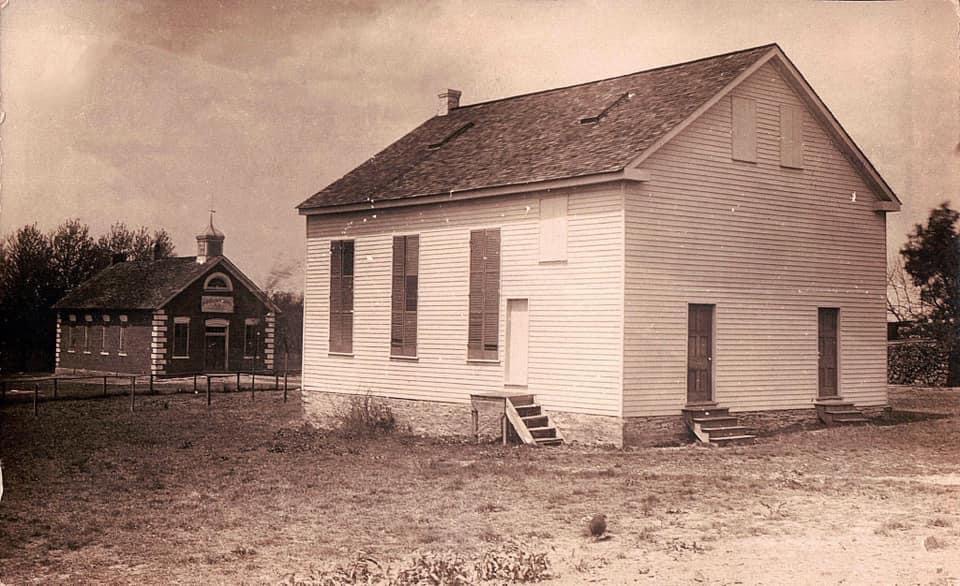
On Cottleville’s Chestnut Street sits a large two-and-one-half story frame building that once served its’ Methodist Episcopal South congregation. By 1810, John Pitman, a veteran of the Revolutionary War had come to Missouri from Kentucky, settling just to the south of the Cottle family. Portions of his huge estate would provide two additions to the town of Cottleville. John Pitman was owner of a large amount of enslaved property. He had been born in what was Bedford County Virginia in 1757. In 1776, Kentucky would become a County of Virginia, and eventually a state in 1792. By 1800, we find Pitman paying taxes on that property in Kentucky. However, many early Missouri settlers were like Pitman, and had received payment for their service in the Continental Congress during the Revolutionary War in the form of a Land Warrant, in the newly acquired Louisiana Territory. In February of 1805, John married Magdelene Irvine, and their son David Kyle Pitman was born that December.
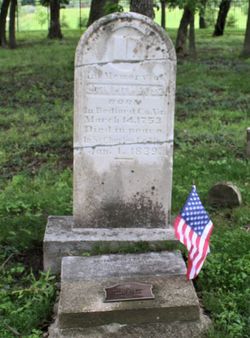
John Pitman (1753-1839) was the son of Thomas Pitman, who had come to the Missouri Territory by 1816, with several of his relatives. Some would settle as far west as what became Montgomery County (later Warren County) and some south of him along the Missouri River, near Howell’s Island. He purchased the earlier land grant of Hoffman, and began building what would become the largest plantations in St. Charles County and on the Boone’s Lick Road.
The hostilities with the Native Americans had ended with the Peace and Friendship Treaties at nearby Portage des Sioux in September of 1815. And by 1816, John Pitman and his neighbors would ask the Missouri Territorial Government to establish a road to the Boone’s Lick settlement where the Bryan and Morrison saltworks was, near Franklin in Howard County.
Territory of Missouri )
County of St. Charles )
Circuit Court )
) 1816
April Term)
John Pitman – filed a petition signed by twelve householders & upwards – of the County of St. Charles, praying that a road maybe laid from from (sic) the Town of St. Charles, In the direction to Boones lick Settlement, until it strikes the line of Howard County.
Where upon the Court appont John Gibson, Hugh McDermid, James Kennedy, Samuel Lewis & Joseph Yeardley, House holders of said County as commissioners to view & mark out said Road – The nearest & most practicable route – and to the Greatest ease & convenience to the inhabitants and as little as may be to the prejudice of individuals and make return there of – to the Court at the next Term. According to the State in Such case made and provided.
County of St. Charles vis Circuit Court July Term 1816. John Gibson, Hugh McDermid, James Kennedy, Samuel Lewis & Joseph Yeardly, being appointed commissioners, at the last Term of this court to view and mark out a road from the Town of Saint Charles with direction to Boones lick Settlements until it strike the line of Howard Countyand that return should be made to thy Term of the Court, It appearing to the Court that notice has been served on said commissioners – They ordered that the said Commisioners view and mark out a road is aforesaid and make return there of – to the next Term of they Court, And that Notice be given then respectively, by the Sheriff of thy Order.
A True Copy, attest.
Wm. Christy Clk.Ct., Cit of St. Charles[i]
Pitmans Addition to Cottleville
The Methodist religion had come to Missouri with the preachings of John Clark in 1816. According to the Methodist Archives at Central Methodist University in Fayette “In 1844 when the Methodist Episcopal Church separated into the MEC and the MEC, South, Missouri officially went South. Both churches operated in Missouri, many times side-by-side in the same town“. By 1854, John Pitman’s son David, and his son Richard would join with others to build a frame church building at the cost of $1,600. Other founding members were William C. Ellis, S. R. Watts, and James T. Sanford.They would start out with 20 members.[ii]
When John Pitman passed away, his youngest son David Kyle Pitman (1805-1891) and his grandson Richard Hickman Pitman (1830-1893) would inherit his home and much of his enslaved property. The Pitman home was built by the enslaved on the west side of Cottleville along the Boone’s Lick Road, with the family cemetery on the opposite side of the home. On July 3rd, 1856, David Kyle Pitman would record his plat of an addition to the town of Cottleville.
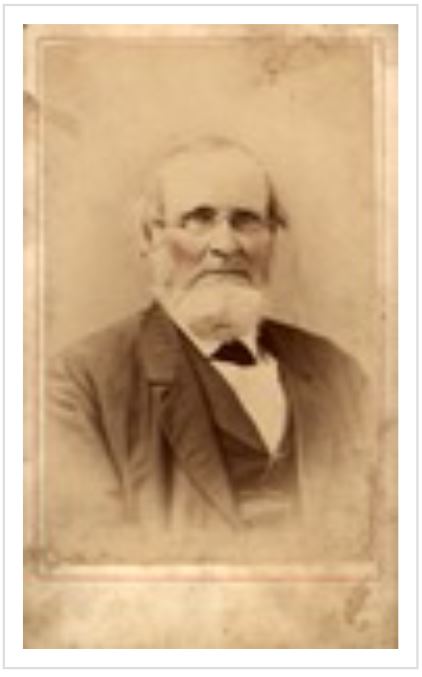

David Kyle Pitman’s property stretched from Cottleville, up to James Alexander’s further west on the Boone’s Lick Road. David Pitman was one of St. Charles County’s largest enslavers in 1860 with over 35 people living in homes behind his home on the Boone’s Lick Road. By that time, David’s son Richard had married and also lived on the Pitman farm, and had ten more enslaved people of his own. John Pitman’s son David Pitman had gifted Archer Alexander (1806-1880) to his son Richard Hickman Pitman in 1859During the Civil War in 1863, his son Richard Pitman was a Confederate sympathizer and involved in treasonous activity, and because of this his enslaved man named Archer Alexander would be given his freedom.[iii]

IT WAS 12 MILES FROM ST. CHARLES TO PITTMANS (COTTLEVILLE) BY STAGECOACH IN THE LATE 1830s AND A FULL DAY’S JOURNEY. Today you can leave Berthold Park on Main Street and go south to the Boone’s Lick Road where you make a right turn and proceed west for one mile. At First Capitol (Hwy 94) you proceed west (left) on Hwy 94 to the Mid Rivers Exit, go west to Hwy N, where you make a left turn. You stay on Hwy N – which is the Boone’s Lick Road, as you pass Cottleville, to Pitman’s. This takes less than one hour in 2025.
[i] U.S. Circuit Court, Territory of Missouri, County of St. Charles, Book A, Box 15, File 38, April 1816
[ii] Dorris Keeven-Franke, Cottleville Legacy https://cottleville.org/
[iii] Dorris Keeven-Franke, The True Story of Archer Alexander, https://archeralexander.blog/


FOR MORE ABOUT THE BOONE’S LICK ROAD SEE https://booneslickroad.org/
SUBSCRIBE TO STCHARLESCOUNTYHISTORY.ORG (FREE) AND RECEIVE DAILY EMAILS BY DORRIS KEEVEN-FRANKE
 ST. CHARLES COUNTY HISTORY
You must be logged in to post a comment.