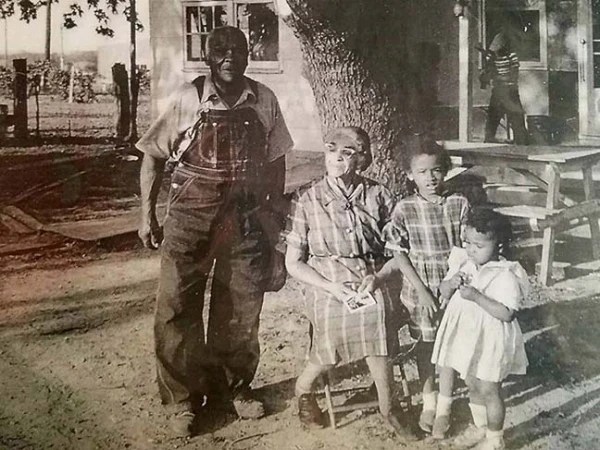
The Keithly farm directly adjoined land purchased by German emigrant Arnold Krekel to the northwest, of 320 acres, where the town of O’Fallon was founded in 1856. Arnold’s brother Nicholas Krekel would become the O’Fallon Station’s first postmaster and Station Agent when the North Missouri Railroad came through in the 1850s. But Keithley had been there for many years before, since the 1830s, and his land was further east. And on his land was a road that led from his plantation house up into town to the Railroad tracks, just east of the station. On that road, his enslaved had lived for generations, which was how it had earned its name. The 1930 Census taker would refer to it in a derogitory manner, but for the sake of our younger readers, I will just call it “the hill”. Today, we call it Sonderen avenue.

Sage Chapel Cemetery sits on an adjoining hill to the south, that the pall bearers coming from the three black churches would have to climb for each funeral. Going home, they would descend and then climb up “the hill” as they headed back to town. (One has to take today’s Interstate 70 out of the picture.) The first home they would pass would be that of Simon White, on the west (left) side of the road. Tucked back out of site, the house had been built in the early 1900s, and the high schoolers would catch the old rickety bus to St. Charles called Franklin School to be able to get their education. His wife Cora was born an Abington.
Across the road from Simon and Cora, was Liberty Abington, who lived next door to the Sage Chapel Church. He had purchased that quarter acre from the Church’s trustees in 1881. The Abington family had been brought to Missouri back in 1837, enslaved by Henry Abington, who settled just south of Snow Hill, today’s Foristell. Nathan Abington who was only six years old when they came, was one of the early burials at Smith Chapel Cemetery, when he died in 1899. There are also Abington family buried at Grant Chapel Cemetery in Wentzville. (no longer standing)
After passing Liberty’s house you came to Wishwell Baptist Church, which was right along the creek bottom where they would hold revivals and baptisms along with their services. The earliest black Baptist Church in St. Charles County is Hopewell, and was where they were former members. Hopewell Baptist Church had been started over on the Boone’s Lick Road back before the Civil War. This was a very old church. (no longer standing)
As you climbed the hill, on the west (left) side, you passed the black school house that the members of community had built. Education was segregated back then, and very few communities had schoolhouses that were attended by both the black and white children together. This was only the early grades for the area’s children in the 1800s.

Right next to the schoolhouse was the Cravens Methodist Church South (no longer standing) which originally allowed the enslaved to sit in the gallery to attend. Later, the white community would build another Methodist Church south of town, and the black people would start using this church building. Since Sage Chapel was not being used, it would fall into disrepair. All three churches, Sage Chapel, Wishwell, and Cravens would use what we call Sage Chapel Cemetery to bury in. And for a brief period, at the turn of the century a dispute led to Wishwell and Cravens purchasing an acre of land across town and creating a cemetery named Union Cemetery. However it was short lived, and everyone returned to using what we call Sage Chapel by 1910.
Across the street on the east side sits a large two story house, that was being used by the black Oddfellows at nearly the same time. When the house was later sold, the buyer was informed that the Oddfellows would still hold title, and their meetings for two more years. The family who were purchasing it, were living down the street, and that was fine.
I’m sure this tour of the hill is not complete, as there were others who lived on the hill… the Edwards, Williams, Lucketts, Claiborne, Oday, Griffen, Hubbard and Stuart. This is a story of a community, all born in Missouri. From the 78-year-old Judge Williams, who had been born enslaved back in 1850, and his son Thomas’ house was where Pearl Hubbard, the school teacher boarded, down to 9 year old Nellie Luckett, just past the Thomas Luckett house, all according to the 1930 Census. These were the people who lived on the hill.
For more stories about St. Charles County subscribe (for free) to stcharlescountyhistory.org
Or you can follow us on Facebook
 ST. CHARLES COUNTY HISTORY
You must be logged in to post a comment.