
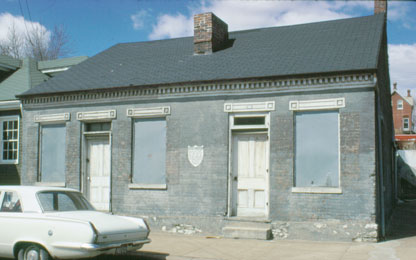
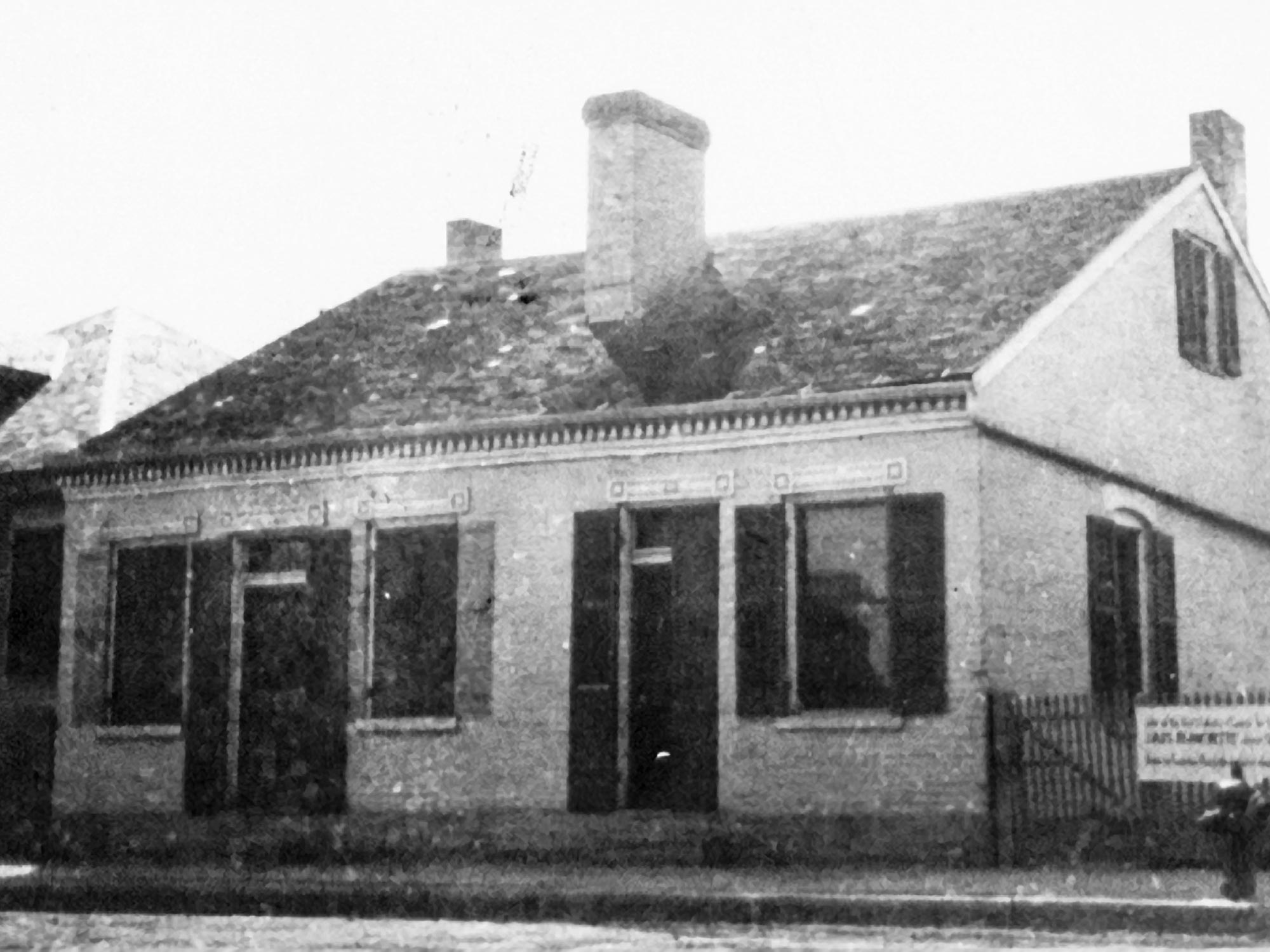
Tayon House 119 McDonough St – Said to have been built in 1791 by Don Carlos Tayon, the second Commandant of the District of Saint Charles. He served following the death of Louis Blanchette in 1793, until 1802 with the appointment of James Mackay. Considered to be a great example of French style architecture , the basement floor of today’s building, with its’ brick floor, was actually the first floor at that time. Inside the original first floor, with a ceiling of hand-hewn beams was where lavish Cotillions were given when Saint Charles hosted the Corps of Discovery in 1804. Later the building became the home of Presbyterian Minister Timothy Flint, whose honored guest was once the famous author Washington Irving who would share the setting of this visit in his several of his books.
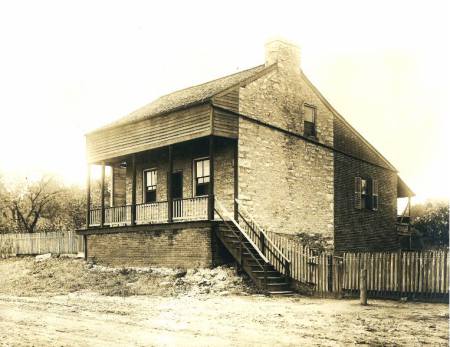
Timothy Flint was a Presbyterian Minister, who would bring the church, Solomon Giddings and Elijay Lovejoy to St. Charles. It is said that in 1804 when Lewis and Clark began their journey, that in their journals they chronicled ” only one brick house. ” Yet both Tayon’s and Blanchette’s house were supposed to have been here and they are both brick. There were over 100 families here by that time too. We do know that Lewis and Clark also attended church here.
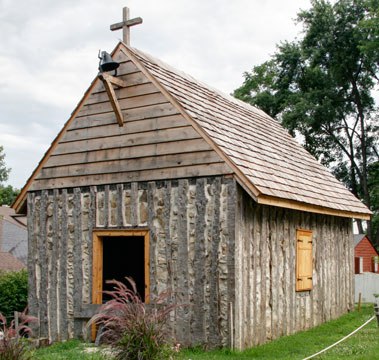
Borremeo Catholic Church
Behind 401 S Main St, Saint Charles, Missouri, 63301
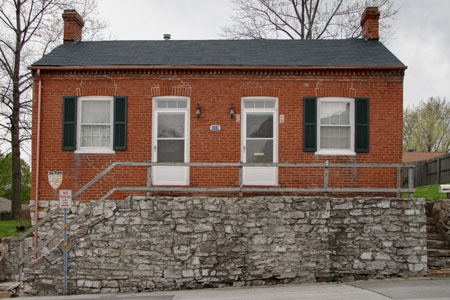
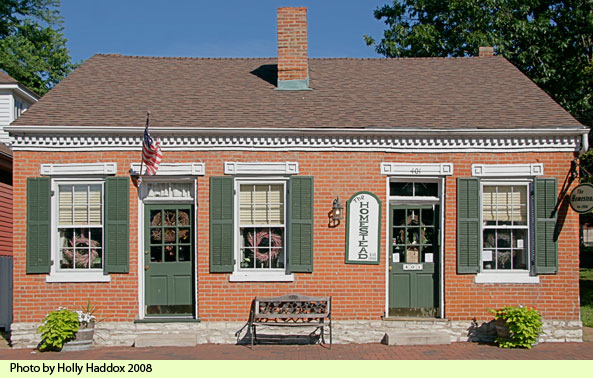
The brick duplex (401 S. Main) Circa 1828 (Grandma’s Cookies – Everyone’s Favorite!) – was built in the French style between 1818 and 1828 by Father Van Quickenborne who served as the priest at the Borromeo Catholic Church, which was located to the west of this building. In 1789, the citizens of Les Petites Cotes had petitioned the King of Spain for permission to build a church. Approximately 30 men gathered at the house of Louis Blanchette in the presence of Don Manuel de Perez, Lieutenant Governor and Commandant of the District, to sign the document. Nearly all signed with a mark, including Blanchette who served as the local commandant. The petition stated that a church be constructed of vertical logs set in the earth and measure 40 by 30 feet. Don’t forget to look behind for the church.
Would you like a daily email with St. Charles County history right in your inbox?
© Dorris Keeven Franke 2025
 ST. CHARLES COUNTY HISTORY
One response to “The Commandant and his Church”
[…] open oven. Between Kircereau’s home and his Uncle Tayon’s brick house (see yesterday https://stcharlescountyhistory.org/2025/06/27/the-commandant-and-his-church/) which was directly to the west, was a building that was said to be used by their […]
LikeLike