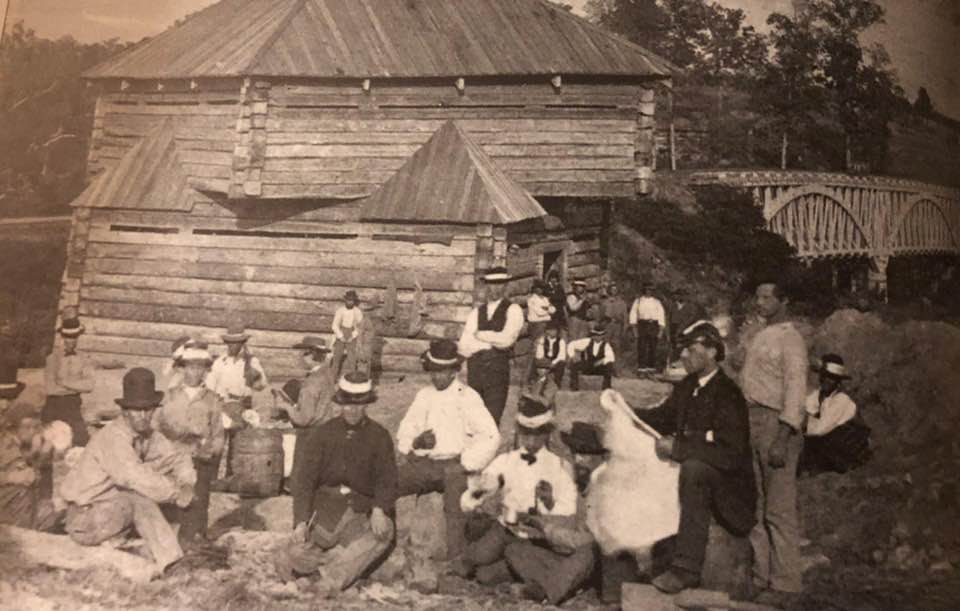
In 1863, Archer Alexander was the enslaved property of Richard Hickman Pitman of Cottleville, while his wife Louisa, lived further west at Naylor’s Store on the Boone’s Lick Road in Dardenne Prairie, enslaved by James Naylor. They were a married couple who had been split up, but Archer was always given Sundays to visit his wife. One evening, as he went to visit Louisa, Archer overheard a meeting of the area’s Confederates planning an attack on the nearby wooden trestle of the Peruque Creek Bridge. The railroad bridge spanned a huge gorge where the small river ran through the rocky bottom of it. The Union forces had built a stockade fort just to the west to guard it from just such attacks. The Confederates had been working at sawing the bridge’s timbers for weeks, and had guns and ammunition stockpiled in the ice house at Captain Campbell’s (the former Alexander home in Dardenne Prairie) for use when the bridge collapsed. Archer, sensing the danger was imminent ran five miles to the Peruque Creek Fort, in the dark on a winter’s night, in order to warn the troops. The North Missouri Railroad was a vital link, carrying troops and supplies for the Union forces during the Civil War. He saved countless lives that night.
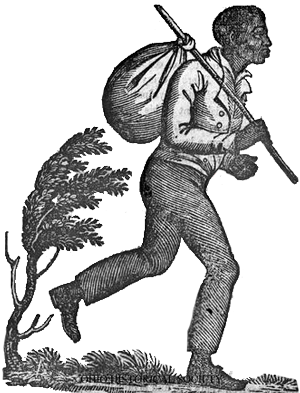
It wasn’t long though, before suspicion of Archer being the informant began. Fearing for his life, Archer fled on the Underground Railroad, following a route that crossed the Missouri River at Howell’s Ferry. He had fallen in with sixteen other men, close friends from Dardenne Prairie, enslaved men from McCluer, Bates, Pitman and other plantations who were also crossing the river that same night. They were using a boat left for them by a prominent white man, long suspicioned for his abolitionist activities near the Ferry Landing. The town of Howell, and the Ferry Landing, was on the north side of the river, and owned by Thomas Howell, whose families had come with the Boone, several generations before.
On the south side of the river, the land was marshy, and connected to what had originally been called the old Bonhomme Road, later the St Louis Plank Road, and when that failed, simply became Olive Street Road as it connected there in the City. It was a well used farm to market road, that connected towns like Bellefontaine, Gumbo, and Centaur to St. Louis and the Mississippi Riverfront. But this was also a network to freedom, where one could find safety in hidden rooms, cellars and attics. Area slaveowners realized what had happened and captured all of the men, including Archer, and alerted their enslavers. The Slave Patrol celebrated their success that night at a Tavern while waiting for those they considered their rightful owners to retrieve their property, as they would be rewarded for their efforts. However, in the early predawn hours, Archer managed to slip away and escape the Patrol and continue his journey to freedom. The sad fate of those who were returned, is unknown, but the punishment for trying to escape was always severe.
When he reached the outlying border of the city, Archer went to a German butcher shop where he knew it safe to share who he was. Soon, the wife of a prominent Unitarian minister named William Greenleaf Eliot, who lived nearby, arrived for Archer. Taking him to her home nearby, Archer thought he had met an angel, and that he was safe. Or so he thought. When Eliot contacted Pitman, wanting to purchase Archer and emancipate him, Pitman sent men to Eliot’s home to retrieve “the property” that Pitman considered was rightfully his. Archer was considered a “fugitive slave” by the 1850 law, but as Missouri was under Military Law, and with an Order of Protection from the Provost Marshall Archer was to remain under Eliot’s care.
Pitman was arrested, and Archer was returned to Eliot to await a military hearing. That September on the 24th, Archer Alexander was given his FREEDOM for his services to the Union Military Forces and because of his enslaver’s treasonous actions. Archer Alexander was emancipated!
Archer Alexander died in 1880 and is buried at St. Peter’s U.C.C. Cemetery on Lucas and Hunt in Normandy. His burial site is on the National Underground Railroad Network to Freedom, a program of the National Park Service under the Department of the Interior. It is among eight other such sites in the St. Louis area. For more about the National Underground Railroad Network to Freedom see https://www.nps.gov/orgs/1205/index.htm

For more about Archer Alexander see the blog https://archeralexander.blog/
For more stories about St. Charles County like this subscribe to my blog:
 ST. CHARLES COUNTY HISTORY
You must be logged in to post a comment.